
A couple of things occurred to me while I was watching the World Baseball Classic championship game last week between the United States and Venezuela.
The game was being played at the Florida Marlins stadium in Miami, which, when I last checked, was an American city.
Yet, judging from the fans in the packed stadium, the Venezuelan team was the home team, not the American team.
The announcers suggested that 80 percent of the audience was cheering for the Venezuelan team, while only 20 percent was cheering for the Americans.
So, here we were in America, playing a game invented by Americans that was once considered the “Great American Pastime,” and the American team was essentially the visiting team. In Miami. In America.

The only thing worse would have been if the game had been played in Cooperstown, N.Y., the place where baseball was invented and home to the storied Baseball Hall of Fame.
Ultimately, despite a US team that had a murder’s row of big hitters, Major League MVPs, and young superstars in the lineup, Venezuelan pitchers held American hitters to just two runs on three hits and won the championship game 3-2.
Sadly, the entire affair could have been a metaphor for our country—especially when it came to the audience who showed up to cheer on the Venezuelan team. As I watched the game unfold, it was clear that Venezuelan flags outnumbered American flags by a factor of 10 to 1.
Watching the game, it occurred to me that, unlike the 19th and early 20th centuries, today’s America is no longer populated by immigrants who came to become Americans. The bulk of today’s immigrants—be they legal or illegal—do not come to America to assimilate and to “become Americans.”
Instead, they are bringing their culture, religion, and language with them, and most seem intent on recreating mini-enclaves and communities that are replicas of their home countries. At least it seems that way to me.
However, in the interest of fairness and to fully understand what is happening in the immigrant community today, I conducted some research into the issue.
I am aware that today’s America is vastly different from the one that my great-grandparents came to from Denmark, Ireland, and England in the 19th century. While the process of legal immigration is similar, I found that the situation has changed because of a few key reasons:
- Technology and Connectivity: In 1900, once you left Denmark, Sicily, or Berlin, you might never speak to your family again. Today, WhatsApp, FaceTime, the Internet, and cheap air flights allow immigrants to maintain a “transnational” identity. This makes the home country feel more present, even if the immigrant is working and paying taxes in the U.S.
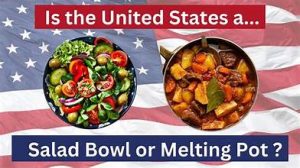
- The “Salad Bowl” vs. “Melting Pot”: In the past, there was heavy social and sometimes legal pressure to “Americanize” through forced assimilation. Today, for better or worse, American culture leans more toward “multiculturalism,” in which people are encouraged to maintain their heritage while participating in the broader economy and society.
- Visual Symbols: The flying of foreign flags (Mexico, Venezuela, Honduras, etc.) or the presence of America’s 3,000 Muslim mosques can feel like a rejection of American identity to some. Forty years ago, there were only about 300 mosques in the U.S., which means there has been a 1,000 percent increase since 1986. Liberal sociologists view this as “symbolic ethnicity”—maintaining a cultural connection while still being legally and economically integrated as Americans.
Those factors apply mostly to legal immigrants. For the estimated 12-15 million migrants who invaded the country illegally during the four-years of the Biden administration, there is less motivation to “Americanize,” because they have no legal status. Assimilation is not a legal option for them.
Nevertheless, assimilation remains the primary engine of American society, even though it has shifted from a structural model that forces everyone to be the same to a functional one that ensures everyone can participate in the same economy and legal system.
The Muslim enclaves in Michigan, Minnesota, Texas, etc., are often “gateway” communities. They provide a soft landing for newcomers, but sociologists argue that the children born in those enclaves will eventually move out, marry people from other backgrounds, and identify primarily as American.
Some sociologists often refer to the “three-generation” rule and maintain that it remains the strongest indicator of assimilation.
The three-generation rule maintains that the foreign flags and foreign-language storefronts often represent the first generation (the immigrants themselves), while their children and grandchildren follow a clear path toward the English language and ‘becoming American.”
Time will tell if that is what happens—especially in traditional Muslim households where conformist or orthodox Islam holds sway.
So, if there is this new mode of assimilation, why do we still see migrants waving their foreign flags, and why do the cultural and religious enclaves persist? And if immigrants are learning English faster, why does it feel like they aren’t?
I found that there are several “optical” differences:
- In the early 20th century, mass immigration from Europe was halted by World War I and the 1924 Quota Act. This “cut-off” forced immigrant enclaves to age and dissolve. Today, immigration is a continuous stream, meaning there is always a “fresh” first generation arriving in places like Michigan, California, Minnesota, or Texas, keeping the enclave visible even as the previous generation moves out.
- Flying a foreign flag or maintaining a “mini-enclave” is often viewed by sociologists as “symbolic ethnicity.” Just as Italian-Americans and German-Americans in the 1920s had social clubs and Italian and German-language newspapers, modern groups use these symbols to maintain cultural pride while simultaneously participating in the U.S. workforce and legal system.
- Unlike the 19th-century Irish, German, or Italians, today’s immigrants have the internet and satellite TV. This allows them to stay connected to their home country’s culture, which can make assimilation look “incomplete” to outside observers, even if the immigrant is functionally fluent in English and paying American taxes.
That’s the view from the “other side” of the issue. It seems like a practical, even logical explanation for what is going on in the US today.
But somehow it leaves me unconvinced.
For one thing, the sheer numbers of immigrants—legal and illegal—seem overwhelming…53 million estimated today, compared with 13.5 million during the “Great Immigration wave” between 1890 and 1930.
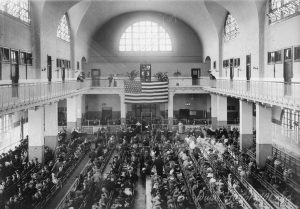
The difference is that in 1910, when there were 13.5 million immigrants in the U.S., those migrants were almost all here legally. Considering that the population of America in 1910 was 92 million, that meant that immigrants made up 14.7 percent of the total population.
Today, because most of us have watched in horror as thousands upon thousands of illegal migrants were ushered into the country every week by the Biden administration as replacement voters for the working middle-class that Democrats have lost, it feels like our nation is overflowing with immigrants.
But as you can see from the U.S. Census Bureau table below, the actual number of immigrants (legal and illegal) in the U.S. is 52 million, or about 15 percent of the total U.S. population of 331 million.
| Era | Peak Year | % of Total U.S. Population | Estimated Number |
| Early 20th Century | 1910 | 14.7% | ~13.5 Million |
| Record Low | 1970 | 4.7% | ~9.6 Million |
| Modern Peak | Jan 2025 | 15.8% | ~53.3 Million |
| Today (Est.) | 2026 | ~15.0% – 15.4% | ~52 Million |
So even though it feels like the nation is inundated with migrants, the immigrant population is not much larger than it was in 1910, as a percentage.
What is different, however, is the racial and ethnic makeup of today’s population, and for some people, that is a shock. The racial and ethnic makeup of the United States in 2026 reflects a continued shift toward greater diversity, a trend that accelerated following the passage of the Immigration and Nationality Act of 1965. While the White population remains the largest single group, its share has declined significantly since the early 20th century.
In the early 1900s, the U.S. was demographically much more homogenous, with “White” and “Black” being the primary categories tracked. Today, the “Rainbow” effect—driven by Hispanic and Asian growth—has redefined the population.
Check out this U.S. Census Bureau table:
| Race / Ethnicity | 1910 Census (%) | 2026 Estimate (%) |
| White (Non-Hispanic) | ~88.0% | ~57.5% – 58.5% |
| Hispanic (Any Race) | ~1.0% (Est.) | ~19.5% – 20.0% |
| Black / African American | ~10.7% | ~12.5% – 13.0% |
| Asian | ~0.2% | ~6.0% – 7.0% |
| Two or More Races / Other | < 0.1% | ~3.0% – 5.0% |
The Current Portrait (2026)
- The White Population: Currently makes up roughly 58% of the population. This is a steep decline from 1960, when it was 85%, and 1910, when it was nearly 90%.
- Other Major Races: * Hispanics have seen the largest numerical growth over the last few decades, now representing roughly 1 in 5 Americans.
- Black Americans have remained a relatively stable percentage of the population for over a century, hovering between 10% and 13%.
- Multiracial Americans are a significant modern phenomenon; this group has grown by nearly 300% since 2000 as more people self-identify with multiple ancestries because of growing racial intermarriages, etc.
The Fastest-Growing Groups
While Hispanics add the most people overall, the Asian population and Multiracial individuals are currently the fastest-growing by percentage.
- Asians: Growth is primarily driven by international migration (accounting for about 75% of their growth).
- Multiracial: Growth is driven by natural increase (births) and a cultural shift in how Americans self-identify on official forms.
FYI, the sources I used for these data came from the U.S. Census Bureau: Specifically, the Vintage 2025 population estimates and the 2026 Demographic Outlook.
Was I surprised by the data? You bet. And I spent a lot of time thinking about what is happening to the America I grew up in. For one thing, it is hardly recognizable — not only because of changing racial and ethnic demographics, but also because of the sea changes in morality, culture, religion, politics, and diminished expectations of achieving the “American Dream.”
And all of those ruminations were spurred on by a baseball game between what looked like an unbeatable American team and a team of Venezuelan players, most of whom play in the U.S. major leagues.
So if American baseball is a metaphor for life, which some aficionados insist it is, the fact that an unbeatable American team was defeated by an underdog Venezuelan team while 80 percent of the folks in the Miami stands waved Venezuelan flags and cheered them on should not come as a surprise.
Nevertheless, watching that game and the behavior of the crowd in the stands with their shouts of “Venezuela! Venezuela! Venezuela!” and the Venezuelan flags blotting out “Old Glory,” made me realize that this America is not the America of my youth.
However, I prefer to remain a bit ambivalent about this new America, rather than reproach it outright. Some things are simply inevitable—such as change —and God knows America has never been a nation that has remained static. If anything, it has been one of the most adaptable and malleable nations in world history. And that, I believe, has been its principal strength.
A lot of folks may not like it, and some (like me) may feel the America they once knew is fading and disappearing a bit too fast, but as Bob Dylan once sang, “The Times They Are a-Changin’.”

In case you have forgotten this iconic song, here’s a link: https://www.youtube.com/watch?v=90WD_ats6eE
I think it puts things in perspective.
–30–
If you enjoyed this post, please consider subscribing to ForeignCorrespondent and tell your friends to subscribe. “It’s free—what a deal!” If you’ve received this from a friend and would like to be added to our distribution list for future blog posts, simply enter your email in the notifications box to sign up:
https://ronaldyatesbooks.com/category/foreign-correspondent.
You can also find my commentaries on Substack at https://ronyates.substack.com/ and the American Free News Network at https://afnn.us.
Please feel free to comment: We genuinely love hearing from you!