
During my career with the Chicago Tribune, I covered my share of criminal and civil trials. One thing I learned early on was to watch the jury for telltale reactions that might indicate how jurors were processing the evidence.
Did they express any emotions? Shock? Sympathy? Disgust? Anger? Sadness? Drollness?
Doing so gave us courtroom hacks just the faintest insight into which way a jury might be leaning during a trial.
Any insight—even faint—was better than none. And as the jury went off to deliberate, it gave us hacks the kind of flimsy, albeit unsound, legal speculation judges and lawyers loathe from reporters who cover trials.
Of course, we didn’t care what the judge or lawyers thought of us. Our job was to provide insight—any insight, no matter how tenuous or insubstantial —for our readers or viewers.
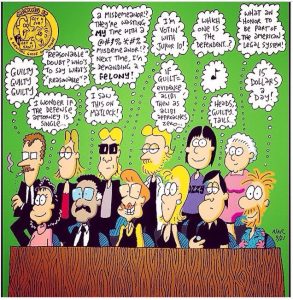
One thing I learned from covering trials is that juries are never predictable. We simply don’t know what’s in their collective heads, what their opinions are, or how they view the defendant or defendants.
But we do know what they are not supposed to do.
From a purely constitutional and procedural standpoint, jurors are instructed not to consider the future, societal, or policy impacts of their verdict. Standard jury instructions explicitly require jurors to:
- Decide the facts based only on the evidence admitted in the courtroom.
- Apply the law exactly as the judge gives it, regardless of personal agreement or broader consequences.
- Exclude sympathy, passion, public opinion, or future precedent from their deliberations.
When a juror deliberates about “what message this verdict sends to society” or “how this will affect future mothers in crisis,” they step outside their sworn oath. In a court of law, appellate judges set legal precedent, while legislatures set social policy.
Fast forward to today, and the three most talked-about high-profile murder trials underway or recently concluded in American courtrooms are the Lindsay Clancy, Luigi Mangione, and Tyler Robinson Trials.
Here’s the status of each trial:
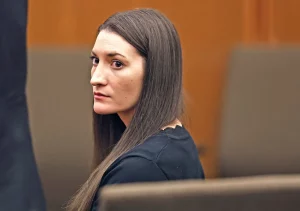
The Lindsay Clancy Trial: On September 4, 2026, Judge William Sullivan declared a mistrial after a jury deadlocked 11–1. While the defense attempted to have the sole holdout juror removed for refusing to apply instructions on reasonable doubt, the judge denied the emergency motion. A status hearing and a hearing on the defense’s Rule 25(b)(2) motion for a required finding of not guilty are scheduled for September 29, 2026. Will Clancy be retried? Prosecutors have legal authority to retry the case following a mistrial. If a second trial occurs, it will be a jury trial unless Clancy explicitly waives her constitutional right to a jury trial and prosecutors agree to a bench trial.
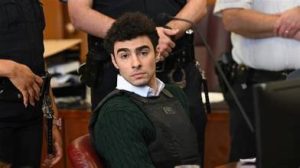
The Luigi Mangione trial: Mangione is facing both state and federal indictments in New York related to the December 2024 shooting of UnitedHealthcare CEO Brian Thompson. His state-level murder trial was scheduled to begin this month. His federal trial on stalking and related charges was pushed back to January 5, 2027 (with opening statements on January 25, 2027) to avoid scheduling conflicts.
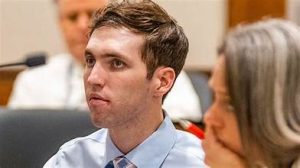
The Tyler Robinson Trial: On September 1, 2026, Utah Fourth District Judge Tony Graf bound Robinson over for trial on all seven counts, including aggravated murder, in the September 2025 shooting of conservative activist Charlie Kirk. Robinson pleaded not guilty. The next status conference is set for October 23, 2026, where the official trial timeline will be finalized.
In the Lindsay Clancy case, we have already seen that the jury completely disregarded those principles and instructions. That jury has made it known via various media interviews that they wanted their verdict to be aimed at ensuring that women accused of maternal filicide in the future are viewed with more compassion and less loathing if they suffer from postpartum psychosis.
In the case of Mangione and Robinson, while their trials have yet to begin, societal pressure from the left to exculpate both men has already begun.
In Mangione’s case, prosecutors will present forensic and surveillance evidence linking Mangione to the scene, along with writings recovered at the time of his arrest. They will argue intent, premeditation, and extreme indifference to human life, positioning the killing as a cold-blooded, targeted assassination. The defense strategy is focusing heavily on suppressing evidence, challenging the chain of custody, attacking the legality of the Altoona, Pa., stop/search, and arguing that pre-trial publicity and leaks have compromised Mangione’s constitutional right to a fair trial.
In Robinson’s case, the state argues Robinson committed a premeditated, politically motivated murder while firing a high-powered rifle into a crowd of over 3,000 people, knowingly creating a grave risk of death to others. This risk to bystanders forms the primary aggravating factor allowing Utah to seek capital punishment. However, the defense is focusing on challenging the death-penalty enhancements. They contend that only a single shot was fired directly at the target, meaning the state cannot prove he intentionally targeted or endangered the surrounding crowd.
Beyond the legal arguments and evidence, what makes today’s trial environment distinct is the sheer volume of public commentary that treats courtrooms as battlegrounds for broader cultural debates. Whether the issue is maternal mental health, corporate health insurance, or political polarization, high-profile trials in America are increasingly framed by commentators and the public as proxies for systemic grievances.

When a case becomes a symbol, public commentary demands that a verdict address the symbol rather than the statute. This raises a crucial question for the legal process: Can 12 ordinary citizens, insulated only by standard judicial instructions, remain entirely immune to these cultural pressures?
Even when jurors genuinely try to follow the law, the societal noise surrounding a trial can make it hard to separate a single case’s facts from its perceived cultural consequences.
If juries consistently shift toward deciding cases based on social policy or future deterrence, the legal system faces a fundamental breakdown.
First, the system loses predictability. The rule of law relies on consistency. If two defendants who committed identical acts receive opposite outcomes because one jury wanted to “send a message” while another followed the evidence, equal protection under the law disappears.
That’s when the jury’s true power erodes. Our jury system is respected precisely because it provides an impartial evaluation of specific evidence. Turning the jury box into a legislative chamber undermines public trust in the judiciary’s neutrality.
Asking whether juries now see it as their duty to shape the future points directly to the fragile balance at the heart of the justice system. The law demands that a trial serve as a microscope—focusing strictly on one defendant, one act, and one set of facts. However, modern media and public discourse constantly push jurors to treat the courtroom as a megaphone for broadcasting broader societal views.
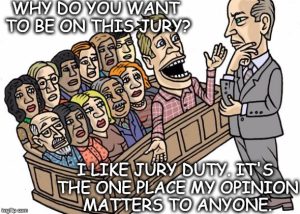
Whenever the megaphone drowns out the microscope, the core principle of individualized justice under the law is placed at risk.
That seems to be what’s happening in all three of these cases.
In cases like Mangione’s, his public support often stems not from an endorsement of violence itself, but from widespread anger towards institutional systems (e.g., the health insurance industry). The defendant becomes a vessel for collective resentment against perceived systemic unfairness.
In cases like Clancy’s involving postpartum mental illness, sympathy often arises from a growing public awareness of maternal mental health crises. Supporters view the defendant as a victim of a medical failure or an overwhelming psychosis rather than a malicious actor.
In politically charged cases, such as Robinson’s, partisan alignment can cause sectors of the public to minimize violent acts or view the offender through a sympathetic lens, treating the act as an extension of a broader ideological struggle. Assassination is okay if the person assassinated is considered malevolent.
Of course, malevolence to one group may be righteousness or uprightness to another.
While these undercurrents influence public opinion on social media and in newspaper comment sections, juries are legally bound to decide cases solely on the admitted evidence and the judge’s instructions on the law. When jury nullification or deadlock occurs, it often reflects reasonable doubt regarding intent or legal sanity under statutory standards rather than an intentional decision to set legal precedents.
Public sympathy tilting toward criminal defendants, or juries grappling with moral versus legal guilt, is nothing new in American jurisprudence. It has strong historical precedents.
For example:
- Lizzie Borden (1893): Despite overwhelming public horror at the axe murders of her father and stepmother, Victorian-era public opinion and the all-male jury struggled to reconcile the violent nature of the crime with societal expectations of upper-class womanhood, leading to her acquittal.

- The “Twinkie Defense” / Dan White Trial (1979): The trial of Dan White for the double assassination of San Francisco Mayor George Moscone and Supervisor Harvey Milk resulted in a voluntary manslaughter conviction rather than murder. The defense successfully argued diminished capacity based on severe depression, sparking widespread public outcry and riots over perceived leniency.
- Andrea Yates (2002/2006): In a direct historical parallel to maternal mental health cases, Yates drowned her five children in a bathtub. Her initial 2002 murder conviction was overturned on appeal, and in her 2006 retrial, a jury found her not guilty by reason of insanity, shifting public understanding toward the severe reality of postpartum psychosis.
- Bernie Goetz (1984): Goetz shot four young men on a New York City subway, claiming self-defense against an attempted mugging. Amid high crime rates in the 1980s, a large segment of the public hailed him as a vigilante, and the jury ultimately acquitted him of attempted murder, convicting him only of illegal firearm possession.
One of the most fraught tensions in the American legal system is the divide between a jury’s strict legal mandate and its broader moral conscience. Viewing this dynamic through the lenses of legal duty, historical precedent, and modern cultural pressures reveals several key components, chief among them jury nullification.
While courts strictly forbid jurors from acting as policymakers, American judicial history shows that juries have always held the de facto power to weigh systemic impact. This concept, known as jury nullification, occurs when jurors refuse to apply the law because they believe the law itself—or the specific outcome it mandates—is unjust or harmful to society.

Historically, this forward-looking, policy-driven mindset has taken distinct forms.
- As a check on oppressive laws: Colonial juries acquitted publishers like John Peter Zenger to protect free speech, and 19th-century Northern juries routinely acquitted citizens accused of violating the Fugitive Slave Act because they refused to participate in upholding slavery.
- As a reflex of social bias: Conversely, all-white Southern juries in the mid-20th century frequently acquitted perpetrators of racial violence, effectively using their verdicts to maintain social hierarchies and send a message about local power dynamics.
In both extremes, jurors were not simply evaluating the immediate facts; they were weighing the broader societal ramifications of their verdict.
Be that as it may, public morality is inherently fluid, reshaped by cultural panic, partisan fervor, and the outrage of the moment. That is precisely why legal standards must remain inflexible.
The law was never meant to be a sail, catching whichever way the prevailing wind of public sentiment blows. It was meant to be an anchor.
When jurors begin weighing how a verdict might ripple through future political battles or social movements, they abandon their fundamental obligation: to evaluate the specific facts, the specific evidence, and the specific individual before them.
A court of law that adjudicates based on future social utility rather than present statutory truth is no longer a court of law; it is a political tribunal.
If we allow the jury’s solemn duty to morph from finding facts to shaping societal precedent, we don’t just compromise individual justice—we dismantle the rule of law itself, leaving equal protection at the mercy of the mob.
–30—
If you enjoyed this post, please consider subscribing to ForeignCorrespondent and tell your friends to subscribe. “It’s free—what a deal!” If you’ve received this from a friend and would like to be added to our distribution list for future blog posts, simply enter your email in the notifications box to sign up:
https://ronaldyatesbooks.com/category/foreign-correspondent.
You can also find my commentaries on Substack at https://ronyates.substack.com/ and the American Free News Network at https://afnn.us.
Please feel free to comment: We genuinely love hearing from you!