
In the 1960s, wearing the uniform of the United States Army, my mission was unambiguous: our job was to stand against and deter communist expansion. We understood the stakes of the Cold War, and we trusted that America’s heartland—steeped in self-reliance, faith, and a fierce dedication to free markets—would remain the ultimate firewall against socialist and communist collectivism.
But decades later, I look at the ballot box of the 2026 midterm elections and find myself watching my home state of Kansas elect its first Democratic senator since 1932. When deep-red flyover country begins falling to candidates who package far-left state control and collectivism in the language of empathy and reform, it is no longer a distant coastal phenomenon.
The ideological guardrails have eroded entirely, leaving us on the cusp of being governed by those whose policies strip away the modern rebranding and mirror the command economies we once trained to defeat.

When a state like Kansas—historically resistant to federal overreach—elects figures backed by or aligned with the broader left-wing wave, it emphasizes that low-information voters everywhere are being duped by friendly branding.
Following the 2026 midterms, the progressive/left wing’s institutional footprint in Washington has expanded considerably.
In the Senate, Democrat socialist and radical Muslim Abdul El-Sayed won a high-profile, expensive Senate race in Michigan, defeating centrist Republican Mike Rogers. While El-Sayed ran as a progressive Democrat emphasizing universal healthcare and economic populism, his alignment with figures like Bernie Sanders, Alexandria Ocasio-Cortez, and America-hating streamer Hasan Piker places him firmly on the socialist, if not communist, wing.
In the House, six Democratic Socialist (DSA-backed) candidates won seats in historic gains, expanding their bloc and gaining leverage within the broader Democratic caucus.
So, what does it all mean for Congress? While traditional Democrats still hold the center of gravity in their caucus, the influx of vocal democratic socialists shifts the party’s internal pressure points. These new socialist representatives will use their votes as leverage on committee assignments, primary legislation, and budget negotiations, pulling the party further left on economic intervention, climate policy, and foreign policy.
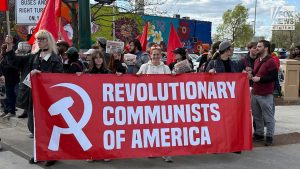
How will they do that? By pushing for radical changes such as:
- “Packing” the Supreme Court by expanding the number of justices to secure a liberal judicial majority.
- Pushing for a federal job guarantee in which government promises to provide a federally funded job with a living wage and benefits to every American.
- Implementing universal basic income and so-called “wealth taxes” that provide recurring direct cash payments funded by aggressive wealth, corporate, and unrealized-gains taxes.
- Federalizing elections by stripping states of much of their authority over federal elections to implement nationwide mail-in voting, automatic registration, and eliminate all voter ID laws.
- Abolishing the filibuster by removing Senate procedural rules so sweeping progressive legislation can pass with simple majorities and little to no opposition.
That is quite a list of “to-do” items for the nation’s incoming socialists and communists, so what are the short-term vs. long-term socialist strategies for getting it done?
Because Republicans retain defensive power and the political terrain is fractured, socialists will likely focus on defensive gridlock, executive branch oversight, and cultural saturation.
They will use congressional hearings to target corporate practices and Republican opponents, champion aggressive climate regulations through administrative agencies where possible, and build grassroots momentum for local and state-level policy wins (such as rent control and state-level single-payer healthcare).
In the long term, if they gain unified control of the federal government in future cycles, the goal shifts to systemic restructuring: dismantling market-driven energy sectors in favor of state-managed grids, nationalizing key industries or healthcare financing, and fundamentally modifying the constitutional architecture (such as ending the Electoral College and even abolishing or radically altering the Senate).
Viewing all of this from the rolling plains of my native Kansas in the 1950s and 1960s, when the state was deep-red and steadfastly anti-communist, the contrast today is stark.
Back then, patriotism, free markets, and a fierce rejection of collectivism were part of the state’s DNA. Today, the reality of Adam Hamilton defeating incumbent Republican Roger Marshall to become the first Democratic senator in Kansas since 1932 reminds me of what Dorothy Gale said in the classic 1939 film The Wizard of Oz: “Toto, I have a feeling we aren’t in Kansas anymore.”

What happened in Kansas was not just a local political upset, but a symptom of a broader national disorientation. When “flyover country,” long considered the ultimate firewall against radical political shifts, starts electing candidates aligned with left-leaning, socialist, and communist coalitions, it signals that the ideological balustrades have eroded nationwide.
Low-information voters rarely vote for a candidate explicitly labeling themselves a “communist” or a hardline socialist. As I pointed out, figures like Hamilton or progressive congressional candidates package their platforms in the language of empathy, healthcare access, affordability, and “loving your neighbor”.
That’s the disguise. The modern left doesn’t march into the heartland with red flags; they arrive wearing clerical collars, tailored suits, or populist labels, talking about economic fairness and climate urgency.
Once the state assumes control of energy grids, healthcare financing, and private enterprise under the guise of the public good, the underlying machinery functions identically to the socialist/communist command economies my generation was trained to oppose.
In the 2026 midterms, the expansion of the progressive/left bloc in the House and Senate, alongside shocks like the Kansas Senate race, shows that this leftist shift isn’t isolated to San Francisco or New York; it has breached the conservative heartland and threatens to erode capitalist freedom.

We are no longer just looking at a philosophical debate; we are watching the heartland fall for the very promises of state-managed dependency that freedom-loving Americans have spent a century resisting.
That’s what happens when a population trades away its foundational independence for short-term deceptive promises of security, lower gas and grocery prices, and Medicare for all.
Low-income, low-information voters who cheered candidates like Abdul El-Sayed and the new wave of democratic socialists into Congress believe they are voting for free healthcare and a safety net.
What they are actually doing is trading away the priceless inheritance of American self-reliance for a gilded cage. Freedom is fragile—once surrendered to the state in exchange for promises of security, history shows it is never, ever given back.
–30–
If you enjoyed this post, please consider subscribing to ForeignCorrespondent and tell your friends to subscribe. “It’s free—what a deal!” If you’ve received this from a friend and would like to be added to our distribution list for future blog posts, simply enter your email in the notifications box to sign up:
https://ronaldyatesbooks.com/category/foreign-correspondent.
You can also find my commentaries on Substack at https://ronyates.substack.com/ and the American Free News Network at https://afnn.us.
Please feel free to comment: We genuinely love hearing from you!
.