
History teaches us that the march toward state control rarely begins with a sudden coup; it begins with a narrative. First, private industries are painted as public enemies—accused of price-gouging, greed, and market manipulation. Then come the congressional hearings, the hostile subpoenas, and the relentless demand for bureaucratic oversight.
As Capitol Hill prepares for a sharp left turn next January, the campaign to put American capitalism in the crosshairs has officially begun.
The ink on the midterm results was barely dry before the targets were chosen. As a newly flipped Congress prepares to open its doors in January, the progressive and democratic socialist wings aren’t just unpacking—they are unholstering the subpoena pen.
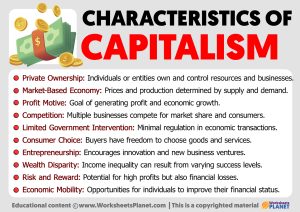
Corporate boardrooms from Silicon Valley to Houston are waking up to a chilling reality: the legislative branch is about to turn private enterprise into a permanent perp walk.
Rather than focusing solely on traditional legislative battles, incoming committee leaders are signaling an era of intense scrutiny, corporate subpoenas, and public investigations targeting alleged price-gouging, corporate fraud, and market manipulation.
For corporate executives, the message is clear: the defensive posture must begin now. As Washington transitions into a period of intense partisan polarization and a possible clash with the executive branch, the looming battle between progressive congressional oversight and the private sector threatens to send shockwaves through the American economy, impacting everything from technological innovation to the energy sector and the broader job market.
When the 120th Congress convenes in January, high-powered panels like the House Committee on Oversight and Accountability and the House Energy and Commerce Committee will serve as the primary vehicles for this investigative agenda. Incoming Democratic chairs are wasting no time clearing the runway to haul high-profile CEOs, including major tech figures and prominent corporate executives, before congressional panels.
Who are the prime candidates?
- Elon Musk: Given his heavy political expenditure during the cycle and his leadership role tied to federal efficiency and tech ventures (such as SpaceX, Tesla, and xAI), Musk is a key target for congressional inquiries regarding government contracts, public-private overlaps, and platform content policies. Musk’s close ties to Donald Trump and his work as head of the DOGE group make him a delicious morsel for a ravenous gang of Congressional Democrats to chew on during a partisan hearing.
- Big Tech Chiefs (Meta’s Mark Zuckerberg, Apple’s Tim Cook): Routinely targeted by both populist right and progressive left factions, these tech leaders face renewed threats of compulsory sworn testimony regarding data privacy, market competition, and children’s safety online.
- Sam Altman (OpenAI): As the face of the generative AI boom, Altman sits at ground zero for progressive anxieties. Democrats scrutinizing AI are heavily focused on the staggering resource consumption of data centers, grid strain, intellectual property concerns, and labor displacement. Hauling the head of OpenAI before a committee of angry Democrats provides the quintessential high-profile, high-stakes spectacle for lawmakers wanting to grill Silicon Valley on the societal risks of shifting the “move fast and break things” notion into the realm of artificial general intelligence.

- Jensen Huang (Nvidia): As the architect of the hardware monopoly powering the entire AI revolution, Huang represents the immense physical and financial toll of the tech infrastructure build-out. With progressive panels zeroing in on corporate resource hoarding, surging utility bills for everyday consumers, and the massive carbon footprint tied to chip manufacturing and data center expansion, Nvidia’s pivotal role makes its leadership an inevitable target for congressional inquiries.
Each of these executives represents the precise blend of technological disruption and massive energy consumption that fuels the progressive wing’s manic economic and social anxiety.
The specific gripes that democratic socialists and progressives hold against key private sectors form the ideological backbone of their investigative agenda. Rather than viewing these private industries and their exceptionally innovative leaders as critical economic drivers, the progressive wing frames them instead through an opaque lens of systemic inequality, environmental threat, and unchecked corporate power.
First on the chopping block will be Artificial Intelligence (A.I.) & Big Tech. Progressive lawmakers view mega-cap tech companies and AI developers as socially irresponsible monopolists. Their primary objections focus on massive resource consumption, especially how energy-hungry AI data centers strain local power grids and expand carbon footprints, driving up utility bills for everyday consumers.
Socialists argue that generative AI threatens mass displacement for working-class jobs without adequate safety nets. They also target tech giants for algorithmic bias, data privacy violations, and allegedly utilizing tax subsidies to fund speculative technologies while dodging corporate tax fairness. Socialists and Democratic Luddites appear eager to cede America’s lead in the A.I. race to China.

Next on the socialists’ hit list are hated fossil fuels & America’s vulnerable power grid. This is the core ideological battleground for democratic socialists. Their gripe is built around historical climate accountability—accusing fossil fuel executives of deception regarding climate change, prioritizing short-term shareholder profits over planetary survival, and allegedly coordinating to roll back environmental regulations.
Progressives are increasingly tying Big Tech and fossil fuels together, heavily criticizing traditional energy providers and cloud firms for partnering with fossil-fuel-powered data centers rather than transitioning quickly to renewables.
Finally, we have the ultimate bogeymen as far as Democratic socialists are concerned: the detested but indispensable defense contractors.
From a democratic socialist perspective, the defense sector represents the definitive symbol of “corporate welfare” and bloated government spending at the expense of preferred social programs like welfare, healthcare, education, and housing.
Investigations here are likely to target defense industry profit margins, supply chain price gouging, stock buybacks funded by federal dollars, and close ties between defense executives and federal procurement officials—especially amid government efficiency and restructuring initiatives.
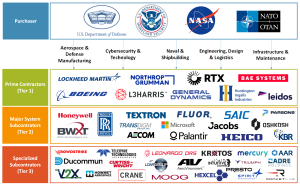
The socialist strategy is designed to put industry leaders on the defensive through hostile, televised cross-examinations, scrutinizing everything from corporate pricing models to federal contract allocations.
Yet, even with the deck stacked by a new majority, minority Republican members are gearing up to push back. By utilizing dissenting reports, demanding equal witness time, and exposing procedural overreach, the GOP will attempt to reframe the hearings as a partisan witch hunt that threatens economic growth, if not capitalism itself.
Nowhere is this collision between progressive policy and private enterprise more visible than in the artificial intelligence and big tech sectors. Democratic socialists have trained their sights squarely on A.I. developers, driven by voter anxieties over massive data-center resource consumption, strained local power grids, and surging residential utility bills.
Faced with mounting regulatory roadblocks, moratoria, and congressional inquiries at home, Silicon Valley tech giants are increasingly looking north. Canada has actively positioned itself as a welcoming destination for digital infrastructure. Backed by national agendas like Canada’s federal Sovereign Compute Strategy and provincial initiatives (particularly in data-center-hungry regions like Alberta and Ontario), Canada is courting hyperscalers with clean power options (such as hydroelectric and nuclear integration) and restructured development inducements.
It is a striking irony of the new political era: as Washington prepares to interrogate and restrict American tech innovators over energy use, our northern neighbors are welcoming digital infrastructure with open arms. It’s another example of foolish Democratic overreach calculated to hamstring corporate innovation and profits, which are considered abominations in the Democratic Party, now dominated by socialists and even a few cagey communists.
Traditional economic pillars are also bracing for impact. The fossil fuel sector remains a primary ideological target for progressives seeking to enforce historical climate accountability and curb traditional energy investments. Concurrently, defense contractors face aggressive scrutiny over profit margins, supply chain costs, and federal spending efficiency.
Faced with the certainty of bellicose and uncompromising congressional investigations, subpoena threats, and hostile committee hearings starting in January, corporate defense lawyers and crisis communications firms are putting corporate “C-suites” through rigorous preparation protocols.
Corporate legal teams are already ordering comprehensive audits of internal communications. Emails, Slack messages, and internal memos touching on pricing strategies, lobbying efforts, environmental impacts, and A.I. algorithmic training sets are being meticulously reviewed. Lawyers are ensuring that compliance protocols are airtight to prevent allegations of spoliation or missing records if a subpoena lands.

CEOs and executive teams are undergoing intense “murder board” style mock hearings. Outside counsel and former congressional staffers simulate hostile committee questioning—complete with aggressive partisan rhetoric, loaded time limits, and rapid-fire cross-examination designed to rattle witnesses into defensive or contradictory statements.
Rather than launching a blanket stonewall against incoming Democratic chairs (which often triggers contempt proceedings or fuels accusations of a cover-up), elite legal counsel generally advises calculated cooperation. The goal is to negotiate the scope of document requests downward, protect proprietary trade secrets, and train executives to give precise, measured, non-evasive answers that deny investigators soundbites for political ads.
Companies within targeted sectors (Big Tech, fossil fuels, defense) are forming joint defense and advocacy coalitions. By aligning lobbying strategies and public relations messaging, they aim to reframe the congressional inquiries not as legitimate consumer protection, but as politically motivated overreach that threatens American competitiveness and jobs.
Ultimately, the impending shift in congressional leadership sets the stage for a high-stakes collision between socialist policy objectives and the foundational free-market principles that have driven the U.S. economy for more than 150 years.
While proponents of aggressive oversight argue that robust investigations are necessary to hold corporations accountable and protect consumers, critics see a deeper, more ideological agenda at play—one where democratic socialists and left-wing activists operating under the banner of the Democratic Party are using regulatory harassment and subpoena threats not just to reform business, but to systematically dismantle and replace American capitalism itself.
The stakes could not be higher: overreaching regulations and adversarial posturing threaten to chill investment, stall innovation in critical sectors like artificial intelligence and energy, and disrupt a surprisingly resilient job market.
As the new Congressional session draws closer, businesses must navigate a turbulent political climate in which the boardroom is treated as an extension of the Washington battleground. Survival of America’s free-market system hangs in the balance.
–30–
If you enjoyed this post, please consider subscribing to ForeignCorrespondent and tell your friends to subscribe. “It’s free—what a deal!” If you’ve received this from a friend and would like to be added to our distribution list for future blog posts, simply enter your email in the notifications box to sign up:
https://ronaldyatesbooks.com/category/foreign-correspondent.
You can also find my commentaries on Substack at https://ronyates.substack.com/ and the American Free News Network at https://afnn.us.
Please feel free to comment: We genuinely love hearing from you!