(In June 2020, I posted the following column about Hong Kong. The reason for the post was that on May 22 of that year, China’s government in Beijing announced that it would allow mainland state security agencies to operate officially in Hong Kong, effectively allowing Beijing to impose national security laws on Hong Kong. That meant that the Beijing government was able to repress and arrest political opponents at will under the same Communist Chinese mandate that exists on the mainland. To show it meant business, pro-democracy protest leaders were arrested—a move that has gone largely unreported.
By making this move, the Communist Chinese government essentially destroyed democracy in the former free-wheeling British Crown Colony. For those of us who once plied the journalistic trade in Asia and Hong Kong, it was a depressing and heart-rending event. Even after Hong Kong was returned to the Chinese government in 1997, when the British lease expired, Hong Kong continued to enjoy significant freedom as a “Special Administrative Region” (SAR). Now that freedom was gone, a new, gloomy era for Hong Kong and its people lay ahead.
Please take a look at my post from a few years ago. I hope you find it thought-provoking.)
The Death of Freedom in Hong Kong
My introduction to Hong Kong was via the 1960 film The World of Suzy Wong, starring William Holden and Nancy Kwan.
The movie was based on the 1957 novel of the same name by British author Richard Mason. It is a classic East meets West story in which a British artist falls in love with his Chinese model, who also happens to be a prostitute.
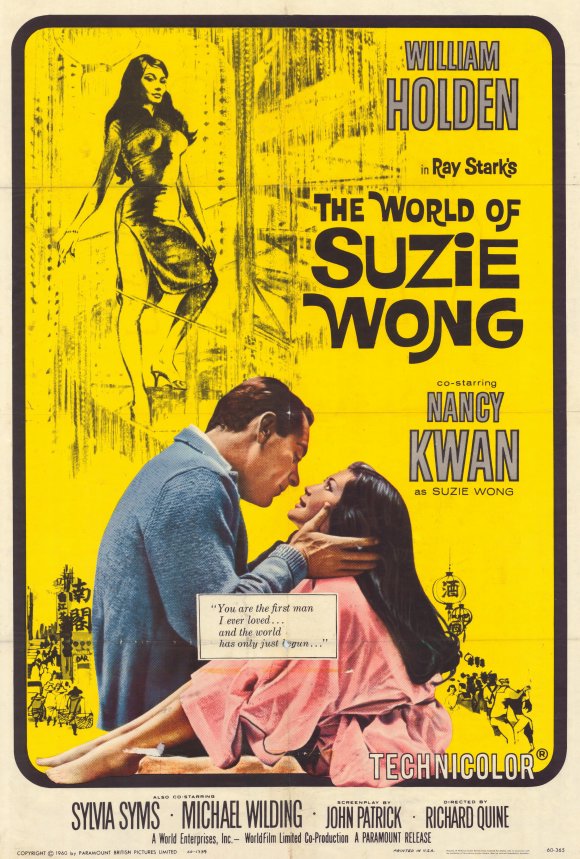
From the moment I watched that movie, which was shot entirely in the old British Crown Colony, I knew I would visit Hong Kong someday.
I finally did that in 1974 when I was posted to Tokyo, Japan, as the Chicago Tribune’s Far Eastern Correspondent. On my way to Vietnam to cover the final throes of that war, I stopped over in Hong Kong for a couple of days.
I wasn’t disappointed.
Hong Kong in the 1970s still retained its colonial flavor, and in 1974, it had 23 years left before the British would hand the place back to China. Hong Kong was an eclectic place, bursting with all the Orient’s mysteries and inscrutability that an impressionable, newly minted correspondent from Kansas could want.
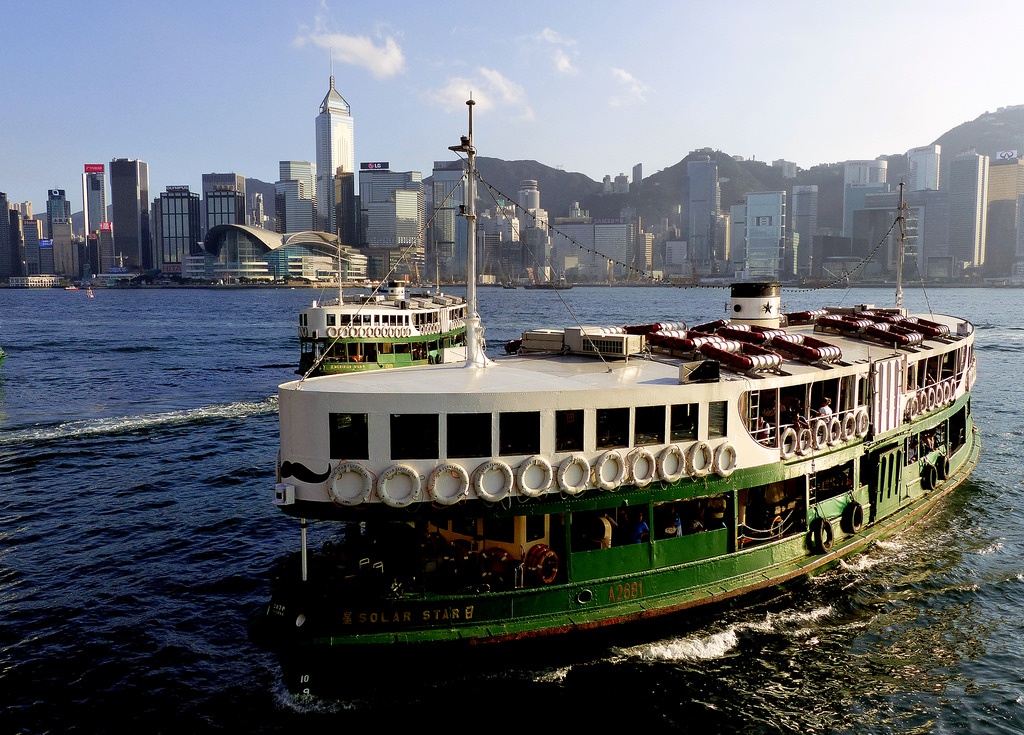
For two days, I did everything possible to absorb Hong Kong into every fiber of my being. I wandered the bustling streets of Kowloon; visited the venerable Peninsula Hotel and its storied lobby; rode the Star Ferry between Tsim Sha Tsui and Hong Kong Island’s Wanchai district (where the fictional Suzy Wong plied her trade); took the mile-long funicular “Peak Tram” up to Victoria Peak; and took the 40-minute taxi-ride to Stanley Market on the far south side of Hong Kong island.
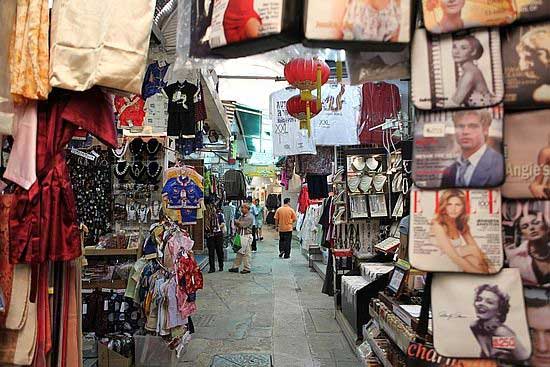
But most of all, I just wandered the streets of Kowloon and Hong Kong Island, taking in the eclectic and myriad scents of Hong Kong—the Cantonese, Hunan, and Szechuan food; the mysterious spices; the exotic fragrances.
Even though the Cross-Harbor Tunnel under Victoria Harbor opened in 1972, as far as I was concerned, the only way to travel between Hong Kong Island and Kowloon was on the Star Ferry. The 12 green-and-white ferries have been making the 8-minute trip between Tsim Sha Tsui and Central on Hong Kong Island since 1898, and the fares of HK $2.70 (about 34 U.S. cents) for the upper deck and HK $2.20 (about 28 cents) for the lower deck haven’t changed in years.
During my almost two decades of working in Asia, I returned to Hong Kong many times. It was always one of my favorite destinations. So perhaps a little history lesson is in order for those of you unfamiliar with Hong Kong’s connection to Great Britain and with how it was once politically, if not physically, separated from the Chinese mainland.
To understand that, you need to go back to the so-called “Opium Wars” between Great Britain and China (1839–1860). After those bloody military and tense trade battles, China was forced to cede Hong Kong Island and a part of Kowloon to Great Britain in perpetuity.
In 1898, Britain negotiated a major land expansion of the Hong Kong colony and signed a 99-year lease with China. That lease ended in 1997, at which time Britain returned Hong Kong to China as a “Special Administrative Region” (SAR) called the “Hong Kong Special Administrative Region of the People’s Republic of China” (HKSAR).
That’s where we stood until May 2020, when China reneged on the 1997 legal agreement assuring Hong Kong would maintain its democracy, capitalism, and autonomy under a “one country, two systems” framework.
In 1997, under the “one country, two systems” doctrine, China allowed the former colony to continue governing itself and maintain many independent systems for 50 years. That doctrine was guaranteed by something called the “Basic Law,” which also established English as one of Hong Kong’s official languages.
Article 2, of the Basic Law, which both mainland China and Hong Kong agreed to, says: “The National People’s Congress authorizes the Hong Kong Special Administrative Region to exercise a high degree of autonomy and enjoy executive, legislative and independent judicial power, including that of final adjudication, in accordance with the provisions of this Law.”
Under that agreement, Hong Kong’s economy transitioned to a mainly service economy, with manufacturing shifting to the mainland. It also developed what is considered the freest economy in the world. With a GDP of $362.9 billion in 2018, it is currently the world’s 35th largest.
As of May 22, 2020, all that changed. China’s government announced that it would allow mainland state security agencies to operate officially in Hong Kong, effectively allowing Beijing to impose national security laws on Hong Kong. That means it will be able to repress and arrest political opponents at will under the same Communist Chinese mandate that exists on the mainland. To show it means business, pro-democracy protest leaders have been arrested—a move that has gone largely unreported.
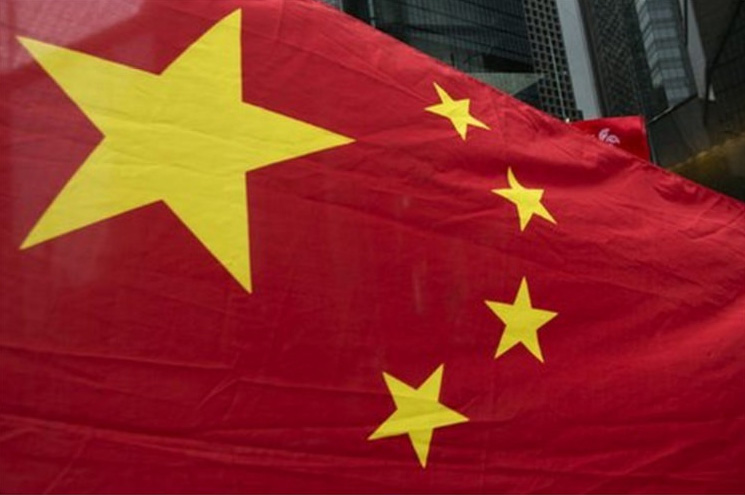
In short, the world is watching the death of freedom in Hong Kong, and with it, the death of any semblance of opposition.
So far, most of the Western world has said nothing and done nothing, with the exception of President Trump. He has repeatedly and publicly condemned China’s seizure and obliteration of the 1997 agreement that guaranteed Hong Kong’s political freedoms, as well as an economy characterized by low taxes, free trade, and minimal government interference.
Last week, Trump declared that because of Beijing’s action, Hong Kong is no longer sufficiently autonomous from China and, as a result, he revoked the former colony’s “special status.” That revocation means targeted sanctions, tariffs, and trade restrictions can be imposed, which will radically alter the fate of a city that has served for decades as China’s economic gateway to the world.
When I consider what is about to happen to Hong Kong, I am glad I had the opportunity to spend time there during its prime, when it was still a British Crown Colony.
The Hong Kong I once knew is fast disappearing and soon will be indistinguishable from the repressive nation ruled with an iron hand by the Chinese Communist Party.
When that happens, one more bright light of freedom and liberty will be extinguished on our planet.
–30–
If you enjoyed this post, please consider subscribing to ForeignCorrespondent and tell your friends to subscribe. “It’s free—what a deal!” If you’ve received this from a friend and would like to be added to our distribution list for future blog posts, simply enter your email in the notifications box to sign up:
https://ronaldyatesbooks.com/category/foreign-correspondent.
You can also find my commentaries on Substack at https://ronyates.substack.com/ and the American Free News Network at https://afnn.us.
Please feel free to comment: We genuinely love hearing from you!
.
Thanks for the memories, Ron. I, too, enjoyed many of the same aspects of HK during countless sojourns between ’55 and ’91. Depending on a number of personal factors, my residences varied from The Booth Lodge in Kowloon to a suite at the Peninsula, with an intermediary stay at an establishment up Nathan Road that was similar in many ways to Suzie’s Nam Kwan. On rainy days I used to ride the lower (open) deck of the Star Ferry back and forth merely for the entertainment value—worth far more than a quarter. Did you everhit the casinos over in Portuguese Macao?