
While many Americans may worry about how California Gov. Gavin Newsom might “Cali-fornicate” America should he manage to gain access to the White House in 2018, those of us who live in this mismanaged, Democrat-ruled dung-show are keenly aware that Gov. “Hair Gel” has already relentlessly trashed the “Golden State.”
Let me count the ways.
Let’s start with Newsom himself. His tenure at the helm has been characterized by a series of mismanagement disasters and systemic failures. In short, Newsom has been an absentee governor, more concerned with paving his way to the presidency and engaging in polemical duels with Donald Trump than with taking care of business at home.
In the pantheon of California governors, Newsom is without doubt the most polarizing figure in recent California history.
His declining hardcore supporters view him as a visionary leader who has protected civil rights and pushed for “California values” on the national stage—and God help us all, whatever those are.
Uh huh.
Critics rank him poorly on honesty and transparency, often citing the 2024 “Panera Gate” controversy—the alleged no-bid contracts and minimum-wage carve-outs for major donor Greg Flynn, a California billionaire who owns 24 Panera Bread franchises in California.

A new minimum wage law increased the minimum wage for fast-food workers to $20 per hour; however, it included an exemption for restaurants that “produce and sell bread as a stand-alone item”—an exemption that appeared to apply almost exclusively to Panera Bread, leading critics to label it the “Panera exemption” after it was revealed that Flynn had donated more than $100,000 to help Newsom fight a 2021 recall effort and another $64,000 to his 2022 reelection campaign.
Then, there were Newsom’s misleading claims about wildfire prevention and forest management that were revealed to have overstated treated forest acreage by nearly 700%.
Tsk, tsk.
Management-wise, his administration is frequently compared unfavorably to his predecessor, Jerry Brown, who was known for fiscal restraint and maintaining a “rainy day fund” that has been largely depleted under Newsom’s tenure.
When I first moved to California in 1976, the state was vibrant and growing. Jerry Brown, AKA “Gov. Moonbeam,” was the governor. His first turn at the helm was 1975-1983, and his second was from 2011-2019. In 1976, California had a vigorous political climate—almost equal in Democratic and Republican control.
There certainly was no suffocating Democratic monopoly as there is today. And Gov. Moonbeam was focused on California—not on a run for the White House.
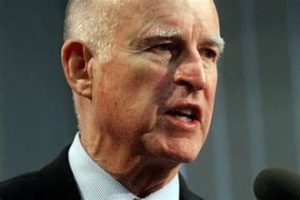
During both of his governorships, Brown was known as the “Tightwad.” His second go-round, especially, was defined by fiscal discipline. He inherited a massive deficit and left office with a $14.5 billion surplus and a robust “Rainy Day Fund.” He was famously frugal, often vetoing bills from his own party that he deemed too expensive, famously telling legislators, “Money doesn’t grow on trees.”
Newsom, on the other hand, is known as the “Big Spender.” Newsom’s tenure has seen unprecedented budget growth. He inherited Brown’s nearly $200 billion budget and almost doubled it to over $350 billion in just six years. While revenues grew by roughly 6% annually, spending jumped by 9%, creating a “structural deficit.” As of 2026, the Legislative Analyst’s Office projects chronic deficits reaching $35 billion annually by 2028.
That’s $35 billion per year! But does Boss Newsom care? Hell no. He will be long gone by 2028—just where, who knows. Though I hope to God it is NOT in the White House.
In terms of management style, Brown and Newsom were night and day. Brown’s was “Socratic” and academic, while Newsom’s has been a more polished, media-centric approach. And why not? The media love Newsom and can’t wait to kiss his heinie whenever possible.
Brown was seen as a “vibe-killer” when it came to ambitious programs. He preferred to address “bread and butter” issues such as highways, pensions, and bridges. And Californians mostly loved him for it.
Newsom, on the other hand, is often criticized for a lack of transparency, specifically regarding the $20 billion Employment Development Department (EDD) fraud (more on that later) and the $267 million hospice scandal, which developed under his watch while he pursued national-level policy debates.
In summary, where Jerry Brown acted as a “stabilizer” following the Great Recession, Gavin Newsom has acted as a “transformer,” pushing California toward broader social safety nets, albeit at a cost that many analysts now warn is not only but downright ruinous to California’s economic well-being.
And that is being kind. Shall we take a look?
Where, oh where to begin?
Let’s begin with fraud—something California is probably leading the nation in.
The scale of fraud during Boss Newsom’s reign has been described by some as an “empire of fraud,” with total estimated losses to taxpayers reaching at least $180 billion. That’s “billion,” with a “B.”
Here’s a brief, nowhere-complete breakdown:
- EDD (Employment Development Department) Fraud: During the COVID-19 pandemic, the EDD knowingly paid out approximately $20 billion in fraudulent claims. Notable lapses included paying out hundreds of millions in the names of death row inmates and failing to implement basic cross-referencing with prisoner lists.
- Hospice Care Scandal: Earlier this month, Newsom and California Attorney General Rob Bonta tried to play “catch-up” by announcing charges against organized crime groups involved in a $267 million hospice fraud scheme. However, while Newswom and his A.G. framed their crackdown as a success, the fact is these “hospice mills” have operated for years under the state’s nose. In fact, a month before, in March, the U.S. House Committee on Oversight and Government Reform had already launched a formal investigation into “rampant taxpayer fraud” within California’s hospice programs. The committee alleged Newsom’s administration was aware of red flags for four years but failed to act.

So far, key findings in the House hospice fraud investigation include:
- A 1,500 percent increase in hospice providers in Los Angeles County since 2010. That’s right. A 1,500 percent increase in hospice providers, many of them in abandoned or empty buildings, and in many of those “hospices,” records showed a 90 percent recovery rate from terminal illnesses. Why, it’s a miracle!
- $3.5 billion in estimated hospice fraud in L.A. County alone, representing 18% of all hospice billing in the entire U.S.
- More than 100 hospice facilities were registered to a single address, and massive billing was done under a single doctor’s Medicare number. And no one in the Newsom administration noticed?
Perhaps the greatest fraud of all came in the form of Medi-Cal Spending. Under Newsom, California became the first state to provide Medi-Cal coverage to all low-income residents regardless of immigration status. This policy has created a “magnet” for illegal immigration and strains a state healthcare system already facing a shortage of primary care providers. In early 2026, some of these benefits were scaled back due to significant state budget deficits, which have reached as high as $68 billion according to the Legislative Analyst’s Office.
Meanwhile, total budgeted Medi-Cal spending has nearly doubled under Newsom, rising from $93.5 billion to nearly $200 billion annually—most of it going to illegal immigrants, even as the state auditor consistently flagged the program as vulnerable to improper payments.
As bad as they are, and while California’s flourishing and epidemic fraud schemes continue to grab the headlines, other issues in the state are hitting closer to home for many residents.
For example, California consistently ranks among the most expensive states in the U.S., often appearing in the top four alongside Hawaii, Massachusetts, and Washington, D.C. While it offers high average salaries, the cost of living, particularly housing and utilities, remains a significant burden for many residents.
According to data from late 2025 and 2026, California’s cost of living is approximately 40% higher than the national average.
- Housing: This is California’s most significant expense, ranking nearly 98% higher than the national average. Typical home prices in major cities like San Francisco and San Jose frequently exceed $1.1 million and $1.5 million, respectively.
- Groceries & Food: Costs are roughly 16% higher than the national average. A family of four can expect to spend over $1,600 per month on groceries.
- Gasoline & Energy: California consistently has some of the highest gasoline prices and utility costs in the nation, rarely dropping below $4 a gallon in the best of times. Utilities are estimated to be 34% higher than the national average, with an average monthly electricity bill of about $175, depending on the size of the house and time of year. For example, in summer, when our two central air conditioning systems (one for the first floor and one for the second floor) are operating, maybe 5 hours a day, our monthly electric bill runs between $500 and $600.
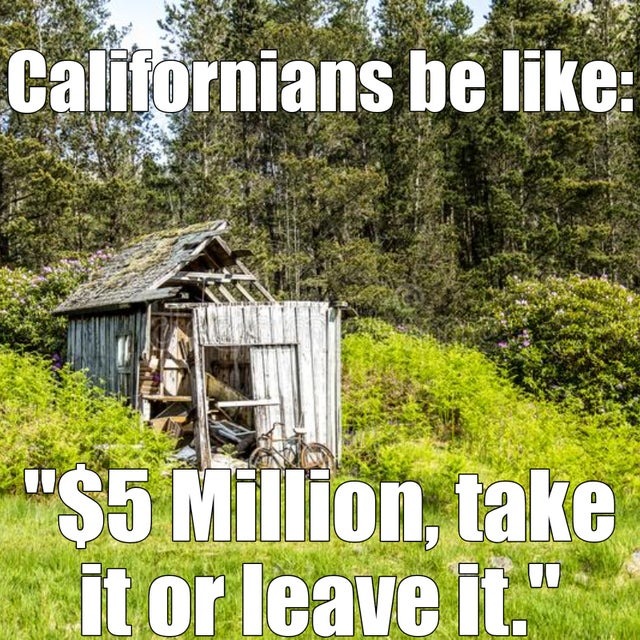
California’s rankings on infrastructure and safety are also huge areas of concern, given the high taxes Californians pay.
- Roads and Bridges: The state’s highway system recently ranked 49th out of 50 states in overall cost-effectiveness and condition. Approximately 44% of urban roads are in poor condition with ubiquitous potholes and shattered concrete. It is no wonder then that the state ranks 1st in the U.S. in road roughness. In a state where the automobile is king, with 36.2 million registered vehicles plying the roadways and bridges, those details are outrageous.
- Education: While California has some of the highest-rated individual school districts in the country (particularly in affluent areas like the Silicon Valley and Southern California), statewide rankings for funding public education typically place it in the top 10 or 15 states, but in the bottom third for actual student performance and graduation rates.
- Crime: California’s violent crime rate (roughly 481 per 100,000 residents) is the 6th highest in the U.S. as of 2026. While homicides have decreased from pandemic peaks, specific categories like shoplifting and smash & grab looting have surged, rising over 48% since 2014, when the threshold for felony theft in California was set at $950–a fact that essentially invites and removes any punishment for misdemeanor theft.
The state’s demographic profile and overall quality of life also present a complex and disturbing picture.
Approximately 27.3% of California’s population is foreign-born. While exact 2026 figures for undocumented residents fluctuate, historical estimates place the number at roughly five million people, or about 12 percent of the state’s total population.
When it comes to quality of life, subjective rankings vary wildly. Many “Quality of Life” indices place California in the bottom tier (often in the bottom 5 or 10) when focusing solely on economic factors such as affordability and tax burden. However, not surprisingly, the state often ranks in the top tier for natural beauty, healthcare access, and cultural diversity.

Despite those positives, how are the negative quality-of-life issues impacting the state’s economic and population growth?
As of early 2026, California is effectively at a population plateau, with the state’s official agencies and the federal government providing slightly different pictures of whether it is technically gaining or losing a few thousand people annually. California joined the Union on September 9, 1850, and for the first 170 years of its history, the state never saw a year-over-year population decline until the COVID-19 pandemic in 2020.
Here are a few facts about California’s population growth—or lack of it.
- California Dept. of Finance: Estimates that as of July 2025, the state grew by about 19,200 people (a tiny 0.05% gain). State officials cite this as evidence that the “exodus” has stabilized. Perhaps, but how many of those 19,200 new residents are gainfully employed taxpayers?
- U.S. Census Bureau: Data released in early 2026 suggests a decline of roughly 9,500 people over the same period.
- The Bottom Line: Whether the number is a tiny positive or a tiny negative, it represents a massive shift from the state’s traditionally robust historical growth. For perspective, in the 1980s, California was adding roughly 600,000 people per year.
- Domestic Migration (Residents moving to other states): California has actually lost more people to other states than it has gained from them every year since 2001.
That’s not good news for Sacramento’s bean counters or for Boss Newsom. You need an influx of working people to continue growing your tax base, especially when the illegal immigrant population is growing at 12 percent yearly and continues to drain the state’s resources via tax-supported financial and social safety nets.
Here’s another shocker for you.
According to Stanford University researchers, more than 352 major companies relocated their headquarters out of California in just a three-year span. High-profile departures in 2024 and 2025 included Chevron (to Texas), Yamaha (to Georgia), and Playboy (to Florida). These follow the earlier exits of tech giants like Tesla, SpaceX, Twitter, and Oracle.
Small businesses are closing or relocating at an even higher rate. In late 2025 and 2026, thousands of retail pullbacks have become common due to rising operational costs and public safety concerns. Legacy California brands like In-N-Out Burger and John Paul Mitchell Systems have also announced major relocations to states such as Tennessee and Texas, citing the difficulty of doing business in California. The Tax Foundation ranks California #48 overall. It specifically places the state near the bottom for individual income taxes (#49) and sales taxes (#46), citing its high marginal rates and complex structure.
In its 2025 Chief Executive Magazine survey, California was ranked in the bottom three (alongside New York and Illinois) for the ninth consecutive year. CEOs frequently cited high taxes, strict labor regulations, and the cost of living as primary deterrents.
The most significant financial impact is currently being driven by a wave of departures among the state’s wealthiest residents, spurred by the proposed 2026 Billionaire Tax Act.
New York’s Communist Muslim Mayor Zohran Mamdani must be thrilled that the Golden State is following his lead in taxing the wealthy! Praise Allah!
Research by the Hoover Institution found that just six publicly confirmed billionaire departures—including Google co-founders Larry Page and Sergey Brin, venture capitalist Peter Thiel, and financier David Sacks—removed a whopping $536 billion in wealth from California’s tax base.
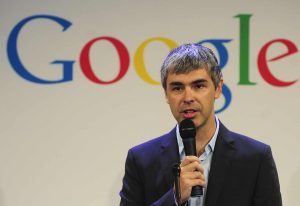
That’s $536 billion, with a “B!”
In December 2025 alone, a “massive shift” occurred, as Page reportedly moved more than 45 business entities out of state and changed his tax residency to Florida.
Proponents of the new 5% wealth tax hoped to raise $100 billion, but because roughly one-quarter of the target wealth base fled before the tax could even be voted on, revised estimates suggest it may collect less than half of that—around $40 billion.
The loss of these high earners is creating a “multi-billion-dollar hole” in the state’s budget due to the high concentration of tax revenue. The fact is, the top 1% of earners in California provide nearly 50% of the state’s personal income tax revenue. California has swung from a $97 billion surplus (in 2022) to a projected structural deficit that analysts expect to persist through the end of the decade.
The Hoover study concludes that the permanent loss of future income tax payments from departing billionaires will likely exceed any revenue gained from a one-time wealth tax, leaving the state worse off by an estimated net $25 billion.
To combat this, California legislators have discussed AB 310, which would impose a tax on former residents for up to 10 years after they leave. While not yet enacted, this has only accelerated the rush of wealthy individuals to sever ties with the state before such a law can take effect.
What a state! Only California could come up with a scheme to extract fiscal alimony payments from those who choose to divorce the state.
None of which particularly concerns Boss Newsom. He has bigger fish to fry—such as running for president in 2018.
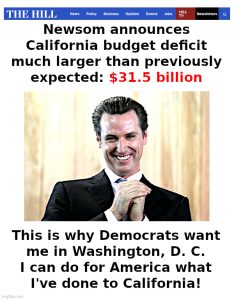
Soon, after this year’s gubernatorial election, California will be in Newsom’s rear-view mirror, just another stepping stone to 1600 Pennsylvania Avenue.
California will be someone else’s problem. And that is what should scare the hell out of the rest of us—especially if Newsom somehow acquires the Democratic Party nomination.
Here’s my question: If the Golden State has already been “Californicated” by Boss Newsom and his rapacious gang of Socialist Democrats, what more malevolent inequities and damage could the autocratic power structure in Sacramento heap on us hapless helots?
Noy to worry. As many of us in California have learned, when the Democratic Party possesses a monopoly on power, you can be sure the fraud and corruption will be absolute.
We wouldn’t have it any other way.
–30—
If you enjoyed this post, please consider subscribing to ForeignCorrespondent and tell your friends to subscribe. “It’s free—what a deal!” If you’ve received this from a friend and would like to be added to our distribution list for future blog posts, simply enter your email in the notifications box to sign up:
https://ronaldyatesbooks.com/category/foreign-correspondent.
You can also find my commentaries on Substack at https://ronyates.substack.com/ and the American Free News Network at https://afnn.us.
Please feel free to comment: We genuinely love hearing from you!
.

Looking for a glimmer of silver behind the storm clouds—even long-time California D leader, Antonio Villaraigosa now admits that D policies are responsible for stratospheric prices, particularly gas and housing costs, driving the affordability crisis. Good luck.