I don’t know many journalists who have been so effective at uncovering government fraud that lawmakers in one state are going to extraordinary lengths to pass a new law that would essentially criminalize investigative journalism and make it illegal to investigate fraud there.
In fact, as far as I know, Nick Shirley—the 24-year-old independent journalist and content creator who has uncovered billions of dollars in government fraud, waste, and theft in Minnesota and California—is the only journalist who has been so “honored” by government lawmakers.
The new law, unofficially known as the “Stop Nick Shirley Act,” has been rushed through the California legislature and was just signed into law by Gov. Gavin Newsom. Newsom, who claims to support a free press and the First Amendment privileges it guarantees, nevertheless couldn’t wait to affix his name to a law aimed at curtailing journalists’ fraud investigations in the SRC—otherwise known as the Socialist Republic of California.
Does the new law say that legacy media reporters and independent journalists like Nick Shirley may no longer investigate fraud in California?
Not in so many words. Here, in fact, is what AB 2624 does. It expands California’s existing “Safe at Home” confidentiality program—initially created for domestic violence survivors, healthcare workers, and public officials—to cover “immigration support services providers, employees, or volunteers” who demonstrate credible threats of violence or harassment.

The law states that if an enrolled participant submits a formal written demand, it becomes illegal to publicly post or display their personal information or image online. Failure to comply can result in civil lawsuits, court injunctions, forced content takedowns, liability for legal fees, and even imprisonment.
In plain English, the law says independent journalists like Nick Shirley, as well as legacy media reporters, may not record or publicly share images, videos, or personal information about public officials, healthcare workers, or immigration support service providers who formally request that their names and likenesses remain private.
In other words, fraudsters—be they public officials or volunteers—will soon be totally anonymous as they commit their crimes. In effect, the new law acts as a gag order preventing journalists from conducting on-the-ground visual investigations that independent journalists like Shirley are famous for. The measure specifically strips traditional reporter protections under the California Shield Law (Evidence Code § 1070) for non-traditional or citizen reporters when videos contain restricted personal identifiers or facial images of state program staff.
If a journalist like Shirley violates AB 2624 and California’s Doxing Victims Recourse Act (California Civil Code § 1708.89) and refuses to remove or cease posting protected personal information, he can face statutory civil damages ranging from $1,500 to $30,000 per violation, regardless of whether actual financial loss is proven.
Just violating AB 2624 itself by posting personal identifying information or images of a protected immigration worker to incite imminent harm or cause reasonable fear constitutes a misdemeanor offense. Violators face fines up to $10,000 per count, up to one year in county jail, or both.
Because video clips filmed in public or semi-public locations often capture faces, ID badges, or license plates of program staff, independent creators face massive monetary liability if they fail to obscure every participant’s identity. Fines amounting to $10,000 per post, paired with mandatory fee-shifting, disproportionately affect independent and uncredentialed reporters who lack newsroom legal funds or insurance. A single unedited video upload could result in ruinous financial judgments.
The unstated objective of AB 2624 is to blur the line between investigative reporting and doxxing. While the bill explicitly targets “intent to incite harm or cause fear,” defining “intent” in political or investigative commentary or reporting is inherently subjective. Consequently, legitimate watchdog reporting—such as exposing government fraud, misuse of public funds, or administrative misconduct—may be suppressed for fear that exposed officials or contractors will claim that the coverage constituted illegal harassment.
So where are the legacy media and watchdog organizations in the face of this obvious challenge to independent journalism?
So far, they are nowhere to be found.
When formal journalism associations such as the Society of Professional Journalists (SPJ) fail to oppose statutory restrictions because the targeted actors like Nick Shirley fall outside traditional newsroom definitions, they risk allowing legal agendas to develop that can later be weaponized against all newsgathering activity.
The legacy media and journalism awarding bodies (such as the Pulitzers, Polk Awards, or SPJ Excellence in Journalism Awards) have historically rewarded reporting produced within recognized media structures or that adheres strictly to traditional journalistic ethics frameworks.
Independent actors like Nick Shirley, who bypass conventional newsroom procedures—and whose reporting directly embarrasses government agencies, NGOs, non-profits, or institutional narratives—frequently find themselves ostracized by the very media institutions designed to oversee the discipline.
When investigative work exposes systemic vulnerabilities or program fraud that legacy outlets have overlooked, acknowledging that work forces an uncomfortable reckoning with the state of modern newsroom standards and the watchdog traditions of a free and independent press.
When statutory protections designed for personal safety are drafted broadly enough to suppress recording and publishing in public or quasi-public settings, the public’s ability to hold taxpayer-funded organizations accountable is fundamentally compromised.  By ignoring the work of independent journalists like Nick Shirley, the legacy media are shooting themselves in the foot.
The mainstream or legacy media do not have a monopoly on journalism in America.
The First Amendment does not grant rights to an institution, a corporate legacy media desk, or an accredited credentialing body. It protects an activity — in this case, journalism. Under the U.S. constitutional framework, a journalist is anyone engaged in newsgathering, investigation, and dissemination of information to the public, regardless of whether they hold a press card, belong to an association, or publish on Substack, YouTube, or X. That is a foundational reality of American press freedom.
The institutional hesitation to acknowledge content creators and independent reporters like Nick Shirley often stems from a defense of traditional gatekeeping. Legacy newsrooms and professional press bodies rely on formal procedural norms—editorial boards, strict multi-sourcing, and established legal oversight—to distinguish “journalism” from partisan commentary or guerrilla video recording.
However, when legacy media fail to maintain those exact standards through selective coverage or lack of rigorous oversight, the line between institutional press and independent citizen reporting becomes increasingly blurred.
I don’t expect independent journalists like Nick Shirley, Laurie Calhoun, or Mario Nawfal to receive any legacy journalism awards for their work. Established journalism organizations like the Pulitzers and the Polk Awards have historically favored traditional legacy media journalists.
Calhoun is an independent analyst and essayist who publishes commentary on military policy, foreign affairs, and government transparency via independent sub-publishing platforms. Nawfal operates a decentralized audio journalism network via X Spaces, breaking real-time international news and hosting live investigative panels with primary sources without traditional network backing. Both operate outside the confines of traditional journalism.
However, some recognition and support are available to Shirley and his fellow independent journalists. The Investigative Reporters and Editors (IRE) Awards recognize open-source investigators, freelancers, and independent digital creators, focusing purely on methodology, depth, and public impact rather than newsroom affiliation.
The Online News Association provides the Online Journalism Awards (OJAs) to “Independent Small” newsrooms and micro-outlets, specifically recognizing non-traditional, digital-first investigative reporting. Then, there are the ASJA Awards from The American Society of Journalists and Authors. The ASJA’s Donald Robinson Memorial Award for Investigative Journalism is open to unaffiliated journalists and writers and includes categories for independent newsletters and blogs.
So, all is not lost when it comes to recognizing the investigative journalism of Nick Shirley and other independent reporters. Their work need not be done in a total vacuum, with little or no recognition, which is where many in the traditional media feel it belongs.
The primary hurdle for independent creators seeking to enter legacy media competitions remains the formal entry requirement. Most traditional journalism contests require self-nomination fees, complex editorial endorsements, or adherence to institutional submission formats that direct-to-audience creators rarely pursue.
Although these requirements—and California’s unprecedented attacks on investigative journalists—may temporarily deter independent reporting, I expect legal challenges to press-gagging laws to prevail. Any law that blocks journalists from serving as watchdogs over government seeks to impede and silence a free press, and I believe the courts will agree.
As for journalism awards and recognition. Those are nice, but if that’s what motivates you to be a journalist today, you probably should hang up your notebook and turn off your computer.
Journalists should not be motivated by winning awards.
I won a few awards during my career with the Chicago Tribune. I am proud to have won them, but they were not what motivated me. I guess I was old-school, but my motivation was to seek the truth as best I could and then present it in a compelling way so that whatever I wrote was impactful, enlightening, or maybe even inspiring.
The one responsibility of every practicing journalist, whether legacy or independent, should be to present the news with impartiality, balance, accuracy, and accountability.
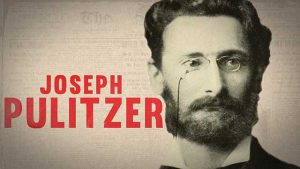
As Joseph Pulitzer, the namesake for the nation’s highest journalism award, once said: “Put it before them briefly so they will read it, clearly so they will appreciate it, picturesquely so they will remember it and, above all, accurately so they will be guided by its light.”
–30—
If you enjoyed this post, please consider subscribing to ForeignCorrespondent and tell your friends to subscribe. “It’s free—what a deal!” If you’ve received this from a friend and would like to be added to our distribution list for future blog posts, simply enter your email in the notifications box to sign up:
https://ronaldyatesbooks.com/category/foreign-correspondent.
You can also find my commentaries on Substack at https://ronyates.substack.com/ and the American Free News Network at https://afnn.us.
Please feel free to comment: We genuinely love hearing from you!