
In 1966, the year I returned from almost 4 years of active service with the U.S. Army Security Agency in West Germany, a new movie was released called “The Russians are Coming, The Russians are Coming.”
Directed by Norman Jewison, the film centers on a Soviet submarine, the “Sprut,” that accidentally runs aground on a sandbar off a fictional, quiet New England island. Wanting to free the sub quietly without starting an international crisis, the Soviet captain sends a small landing party led by Lt. Rozanov (Alan Arkin) ashore to secure a motorboat.
The premise is seemingly benign, but communication breakdowns and small-town gossip rapidly spin out of control, causing local residents to panic and believe a full-scale Soviet invasion is underway.
While a bombastic local VFW leader tries to organize an armed militia, a vacationing playwright (Carl Reiner) and the local police chief (Brian Keith) try to restore order. Tensions peak when the submarine directly confronts the armed townspeople in the harbor.

However, the standoff breaks when a young local boy falls from a bell tower; Americans and Soviets immediately drop their weapons and work together to save him. Realizing their shared humanity, the islanders form an escort of small civilian boats to shield the submarine from incoming U.S. Air Force jets as it escapes safely to deep water.
(NOTE: You can view the film’s original trailer at the end of this commentary).
When I think back on that film, after having spent hours keeping track of hundreds of thousands of Soviet and East German troops mobilized on the east side of West Germany’s Fulda Gap, I wonder how I was able to see the humor in it.
It was a spoof, after all, and I have a well-developed sense of humor, so I laughed like everybody else in the theater that day.
Today, when I see so-called Democratic Socialists who are nothing more than communist wolves in sheep’s clothing, threatening to destroy the nation that I once spent four years defending, I see nothing humorous about these America haters.
Socialist/communist candidates are pledging to eliminate the Senate, the Presidency, and the Supreme Court; to abolish the police force and America’s prisons; to eradicate private property; to open our borders; to nationalize private enterprise; and to turn over the means of production to the government.
In other words, their stated intention clearly isn’t concealed—it is to destroy the America that I grew up in, with its critical freedoms that so many of us are foolishly taking for granted. I am talking about freedom of thought, speech, religion, and press; the right to assemble and protest; the right to travel when and where you want; and the right to bear arms to protect yourself from enemy malefactors or even our own government, should it turn tyrannical.
Is it any wonder then that the right to bear arms, guaranteed by the Second Amendment, is why leftists always want to first confiscate our guns? The means for citizens to protect themselves and to fight against tyranny is always the first thing that socialists and communists eliminate upon taking power.
Some of those irrational power-hungry candidates insist they are Democratic Socialists, not communists.
They are lying. Their ideas and inane proposals are clearly identifiable as Marxist doctrine.
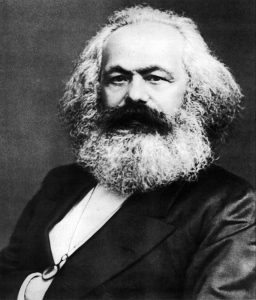
Karl Marx, the father of communism, famously summarized his theory in The Communist Manifesto with the phrase: “The theory of the Communists may be summed up in the single sentence: Abolition of private property.”
He defined the “means of production” as the non-human assets required to produce goods—including factories, raw materials, land, machinery, and technology. He advocated replacing private ownership of these assets with collective, social ownership by the working class, arguing this would eliminate class distinctions and wage labor.
Listen carefully. You will hear even the squeakiest fatuous communist such as Francesca Hong, the socialist running for governor of Wisconsin, or a bolder communist like Zohran Mamdani in New York, mouthing Karl Marx at every turn—though both are quick to deny they are classic collectivists.
Hong especially is furiously backpedaling from her humiliating stacks of injudicious social media posts. Critics have said that Hong has a history of expressing anti-White sentiments, with former X posts resurfacing in recent weeks.
“I ate two bites of my kid’s cheeseburger at a Culver’s in Black River Falls and told him they ran out of ice cream. Mostly just wanted to leave bc I was on the verge of an anxiety attack… too many old white people who didn’t think we spoke English,” she wrote in July 2019. In 2018, she wrote: “Old white dude asks ‘where are you from?’ 2019- “Old white dude asks ‘what is your country of origin?”
“Police exist to uphold white supremacy,” Hong wrote on X in 2021. “Defund, then abolish. Reform can’t be an option.”
Hong wants to raise the state minimum wage to $20 an hour for workers as well as guarantee paid leave. She wants to raise taxes on the rich as well as corporations. Her platform calls for abolishing ICE and giving in-state tuition to DACA recipients. She has also called for all immigrants, illegal and legal, to obtain state IDs. Regarding AI, she has called for a moratorium on data centers on her policy platform. The platform also includes creating government-controlled grocery stores.
When she was recently asked about her previous calls to defund and abolish the police, Hong said that “people can evolve” and added that she will not “defund the police.”
Do you believe her? I don’t. As Abraham Lincoln once wisely said of the American people: “You can fool all the people some of the time, and some of the people all of the time, but you cannot fool all the people all of the time.”

I am not sure where Hong stands on things like personal property and the redistribution of wealth. But, Karl Marx drew a strict distinction between personal property (individual possessions like clothing, home goods, and personal items) and private property (capital and assets used to hire labor and generate profit). He opposed private enterprise because he viewed it as driven by capital accumulation and worker exploitation rather than societal need.
Sound familiar? Just read some of the speeches and social media posts Socialists like Hong and Mamdani have shared.
I have read Marx’s Communist Manifesto (1848) and Das Kapital (1867) in the original German. In both, Marx posited that private enterprise ultimately leads to Entfremdung, or alienation, which isolates individuals in four ways: from the products they make, from the act of production, from their human nature (Gattungswesen or “species-essence”), and from other people.
Marx argued that the concept of “individualism” promoted under liberal capitalist democracy was largely an ideology designed to protect property rights and capitalists’ freedom to buy and sell. He contended that under capitalism, true individuality exists only for those who own property, while workers are reduced to commodities or mere extensions of machinery.
The answer, say Marxists and Democratic Socialists, is to redistribute capitalist wealth by collectivizing things like private property, the means of production, land, technology, machinery, etc.
This is the utopia that both the open and surreptitious communists are looking to shove down our throats.
No thanks.
Returning to 1966 and the impact that The Russians Are Coming had on Cold War attitudes back then, I am fully aware that the film’s purpose was to humanize the enemy. After all, it was released just a few years after the 1962 Cuban Missile Crisis and the construction of the Berlin Wall, which was built to keep East Germans from fleeing the “communist paradise” their Soviet masters had established.
It’s especially personal for me, because after one failed attempt, my German-born wife, her mother, and her sister all escaped from East Berlin to the West.
“The Russians Are Coming” portrayed Soviet sailors not as bloodthirsty aggressors, but as frightened, ordinary human beings who were just as eager to avoid World War III as the Americans were.
It also did a superb job of satirizing mass hysteria. It poked fun at red-scare paranoia and “shoot-first” vigilantism, suggesting that fearmongering and misunderstandings were often more dangerous than the actual threat itself.
I get it. Human beings, when placed one-on-one, often avoid harming each other if given the chance. History is full of examples—like the stories from World War I and World War II in which opposing soldiers set aside their weapons to share Christmas together—that illustrate how people can choose connection over conflict.

The film also served as a rare “feel-good” Cold War satire that offered audiences a brief respite from nuclear anxiety. Norman Jewison even screened the film in the Soviet Union, where it reportedly received a warm reaction.
However, if released today, the film’s satire would land very differently depending on the audience. On a basic level, its core message—that everyday people are fundamentally similar and capable of setting aside tribalism in a crisis—remains a timeless comedic trope.
But the film’s lighthearted, “all-is-forgiven” handling of a foreign intrusion would likely draw sharper polarization today. After four catastrophic years of Joe Biden’s policies, Americans who share deep concerns about open borders, institutional subversion, and anti-American ideological threats would view the movie’s relaxed premise with heavy skepticism, seeing it as downplaying legitimate national security concerns and risks.
For the low-information and history-challenged crowd, allow me to explain a few things. There are legitimate reasons to fear socialism and communism. Historians and scholars widely document the vast loss of life under 20th-century Marxist-Leninist states. Publications like The Black Book of Communism estimate the global death toll from communist regimes—through state-directed famines, purges, forced labor camps, and political executions—at roughly 80 to 100 million people.
As a foreign correspondent, I personally witnessed ruthless communist brutality in the totalitarian nations they dominated, including the mass slaughter of thousands of pro-democracy demonstrators in Beijing, China’s Tiananmen Square, and the murderous rampages of communist guerrillas and autocrats in places like Vietnam, Cambodia, El Salvador, and Nicaragua.
Modern guidelines for teaching history in many states mandate coverage of these events and many others, including the Soviet Gulags, Stalin’s Holodomor in Ukraine, and Mao Zedong’s Great Leap Forward and Cultural Revolution.

But many don’t.
Educational standards in the United States vary significantly by state and school district, but state requirements regarding the way communism is taught have seen disconcerting and alarming legislative revisions in recent years.
Fifty or 60 years ago, students in K-12 schools learned of the deadly excesses of communism. That is no longer the case. Today, it is capitalism that is often condemned and disparaged in the classroom, not communism.
In fact, it has gotten so bad that states such as Florida, Texas, and Arizona have enacted specific legislation requiring public schools to teach the history and impacts of communist regimes, including dedicated observances like “Victims of Communism Day.”
Nevertheless, polled data consistently shows that younger generations (Gen Z and Millennials) view socialism more favorably and capitalism less favorably than older generations do.
There are several factors driving this shift.
First, young people today have no direct memory of the Cold War, the Berlin Wall, or the Soviet Union. For them, “socialism” is rarely associated with deadly Soviet-style or Maoist totalitarianism.
Second, many younger Americans define “socialism” not as government ownership of all means of production, but through the lens of some benign Nordic-style social democracy—advocating for expanded public healthcare, free or subsidized higher education, stronger labor unions, and a robust social safety net within a market economy. In other words, they see socialism as a beautiful blossom minus its deadly thorns.
Third, excessive housing costs, student loan debt, and anxieties about income inequality have led some young people to question whether the current economic model is working in their favor, thus making alternative models like socialism and communism more attractive.
When Hong, Mamdani, or Islamic radicals like Abdul el-Sayed promise “free stuff” and a cradle-to-grave utopia, it’s often an irresistible offer for frustrated Gen Z-ers and Millennials who are drowning in college debt and unable to afford even a starter home.
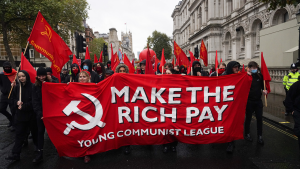
I am inclined to forgive them their political and economic naiveté. They have been deprived of an honest and accurate education when it comes to socialism and communism.
How public schools should balance the teaching of national achievements alongside the historical failures of socialism and communism—and how explicitly they should critique non-capitalist ideologies—remains a central focus of local school board discussions, teachers unions, and state legislative debates nationwide.
Standard U.S. history and civics courses typically cover the Cold War, the rise and fall of the Soviet Union, and the contrast between democratic capitalism and authoritarian communism. But public-school educators must sometimes operate under leftist teaching guidelines and locally approved left-leaning curricula. While individual teachers hold varied personal viewpoints, state school boards and local districts set the required learning objectives and textbook selections.
So where do we go from here?
I believe schools should design a specific high school unit or module built around a comparative matrix of political systems that evaluates electoral checks, judicial independence, freedom of speech, and civil liberties.

High schools should draft classroom discussions, primary source data, and essay assignments that challenge students to identify structural safeguards versus state consolidation of power that socialism and communism demand.
For example, how are state actions bounded? (e.g., judicial review, legislative debates, and constitutional amendments vs. central decree and unchecked executive power).
Does power flow from free multi-party elections and public consensus, or single-party control and political suppression? Are civic programs accompanied by guaranteed civil liberties, or do social benefits require strict ideological loyalty and surveillance? Is state spending subject to investigative journalism, public audit, and dissent, or only by state-controlled propaganda?
By engaging students in a way that allows them to compare a typical capitalist constitutional republic with a top-down Soviet or Maoist-style totalitarian communist regime, it’s entirely possible they will reject the latter in favor of the former.
In 1948 Winston Churchill said, “Socialism is a philosophy of failure, the creed of ignorance, and the gospel of envy.”
He was right. When you believe that the way to increase wealth is to take it from those who have earned it and redistribute it to those who haven’t, you are only triggering the demise of individual initiative and ingenuity in favor of collective mediocrity.
–30–
As promised, here is the link to the 1966 trailer for “The Russians are Coming, The Russians are Coming.” https://www.youtube.com/watch?v=0ACDoxjj9WQ
If you enjoyed this post, please consider subscribing to ForeignCorrespondent and tell your friends to subscribe. “It’s free—what a deal!” If you’ve received this from a friend and would like to be added to our distribution list for future blog posts, simply enter your email in the notifications box to sign up:
https://ronaldyatesbooks.com/category/foreign-correspondent.
You can also find my commentaries on Substack at https://ronyates.substack.com/ and the American Free News Network at https://afnn.us.
Please feel free to comment: We genuinely love hearing from you!