
In the cloak-and-dagger world of intelligence, the most important rule about sharing information is also the simplest: “The need to know.”
Decades ago, while serving with the U.S. Army Security Agency in Germany, that rule governed every second of our lives. From the physical security surrounding our specialized intercept hardware to the strict destruction protocols for the Diana Crypto system, field discipline was absolute along the “Iron Curtain.”
If you didn’t have “a need to know,” you didn’t get access to our intelligence.
We knew where every enemy unit was positioned across the border, and we trusted that the intelligence passed to our allies in the Bundesnachrichtendienst (BND) was in safe hands.
The last thing any operator in the mud ever expected was that decades later, the breach wouldn’t come from a skilled enemy spy slipping past border guards, but from the very top of the intelligence hierarchy in Pullach and Berlin.
The scandal surrounding former Federal Intelligence Service (BND) chief August Hanning and others highlights a dangerous shift in modern national security: the rise of executive-level corruption. What young soldiers once guarded with life-and-death vigilance in the field has become a lucrative commodity for former intelligence chiefs turned private consultants.

The arrest of Hanning and his former chief of staff Manfred D. (German authorities are withholding his last name) represents one of the most serious counterintelligence breaches in post-war European history. Allegations that Manfred D. systematically exfiltrated about 2,000 highly classified BND documents over 14 years, including top-level executive briefings and intelligence shared by partner agencies, carry sweeping ramifications.
The most immediate impact on the U.S. Intelligence Community (CIA, NSA, DIA) will be a severe reduction in raw intelligence sharing with Berlin. Western agencies rely heavily on the “need to know” principle and strict third-party rules (prohibiting shared intelligence from being passed to outside entities).
Knowing that weekly intelligence briefings containing U.S. intelligence were systematically bought and used for private commercial consulting will force Washington to “throttle” the depth and sensitivity of reports shared with Germany.
When an agency’s internal executive briefings—which incorporate raw and synthesized partner intelligence—are leaked over a 12-to-14-year span, partner trust collapses.
The “Third Agency Rule” has been shattered. Intelligence sharing rests on the strict condition that Agency A will never pass Agency B’s data to a third party without explicit consent. When an insider traffics top-level Chancellery briefings (containing inputs from the NSA, CIA, DIA, and Britain’s MI-6) out of Pullach, that rule is fundamentally destroyed.
The reaction by the Nordic and Eastern Flank nations (Poland, Sweden, Finland, France) will be critical. Frontline NATO allies along the Baltic and Eastern Europe rely heavily on rapid, high-integrity intelligence exchange.
For newly joined NATO members like Finland and Sweden, as well as Poland—which faces direct threats on its borders—a leaky BND forces it to restrict what it shares, creating blind spots where unity matters most.
Agencies like the NSA and CIA will not stop communicating with Germany entirely, but they will degrade the classification level of what they send—reverting to sanitized, delayed, or high-level summaries instead of actionable, real-time intelligence.

Even if prosecutors eventually determine that the leaked documents were sold to private clients or non-Russian third parties, Moscow remains a primary beneficiary. In modern intelligence, counter-espionage and situational awareness are zero-sum.
The 2,000 compromised documents included high-level BND briefings on the Russian military and geopolitical posture. Even if commercial greed drove the leak rather than ideological loyalty to Moscow, knowing what Western intelligence knows—and how it synthesizes it—gives the Kremlin a roadmap to obscure its operations and evade detection.
BND intelligence briefings cover critical threat areas, including Iran’s nuclear program and Russian troop deployments. Exposing these reports compromises the sources and methods (informants, technical intercepts, and cyber capabilities) used to gather that information in the first place.
Russian intelligence exploits political and executive corruption in Europe. That a former BND chief—who made several trips to Russia after leaving government—and his chief of staff could maintain an internal document pipeline for more than a decade reinforces Moscow’s long-standing strategy: target elite decision-makers rather than breach field-level cryptographic systems.
Then there is the structural health of the NATO alliance. Just how badly has it been damaged? When mutual trust falters, NATO risks splitting into a multi-speed intelligence hierarchy—where a tight inner loop (e.g., Five Eyes) holds back crucial tactical data from broader NATO distribution lists out of fear of executive leaks in Berlin.
In intelligence and national security context, “Five Eyes” (often abbreviated as FVEY) refers to an elite, highly secret intelligence-sharing alliance comprising five Anglosphere democracies: United States (NSA, CIA, DIA), United Kingdom (GCHQ, MI6, MI5), Canada (CSIS, CSE), Australia (ASIS, ASD), and New Zealand (NZSIS, GCSB).
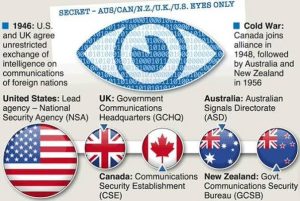
The alliance dates to the 1946 post-WWII UK-USA Agreement for SIGINT (signals intelligence) cooperation. Because these five nations share deep historic ties, a common language, and strict mutual security standards, they share raw, unsanitized intelligence with each other at a level of trust unmatched by any other international partnership. Germany—despite being a major NATO ally—is not a member of the Five Eyes.
If Western intelligence agencies (especially the U.S. and UK) begin to doubt Germany’s internal security due to executive leaks in Berlin, they will retreat into their tightest, most trusted circle—the Five Eyes. Instead of sharing critical, real-time tactical intelligence evenly across all 32 NATO member states, the Five Eyes countries would withhold sensitive data or strictly limit what they pass to broader NATO channels to prevent further compromise.
The scandal exposes a glaring loophole in Western security: former intelligence chiefs taking high-paying consulting contracts, leveraging internal relationships, and treating state secrets as intellectual property.
I recall that field operators in my ASA unit faced strict, life-altering consequences for failing to burn a single sheet from a Diana Crypto Pad or mishandling hardware. Yet here we have executive elites who have operated for years with virtually zero post-service oversight.
Because the stolen documents in the BND breach spanned 2010 to 2026 and included material on critical global security matters—such as the Russian military and Iran’s nuclear program—U.S. agencies must conduct an immediate, wide-scale damage assessment. Intelligence agencies will have to assume that collection techniques, covert channels, and operational capabilities referenced in shared briefings have been compromised.
Then, there is the potential risk to human assets (HUMINT). If executive briefings contained operational details or granular reporting from U.S. human sources operating in sensitive regions, those assets could be placed at risk, requiring emergency extraction or repositioning.
So far, German federal prosecutors have not named any American citizens or U.S. corporate entities as suspects or co-conspirators in the criminal filings. Rather than perpetrators, American intelligence agencies (primarily the CIA) are affected third parties whose shared intelligence was improperly exposed in the leaked material.
German media outlets reporting on early findings indicate that prosecutors have not publicly named which foreign intelligence services received analyses or political information from Hanning, though reporting suggests the primary contacts were not Russian.
The scandal highlights a devastating internal security failure: a former chief of staff exfiltrated thousands of top-secret documents for over a decade under multiple agency heads without triggering internal counterintelligence alarms. This will generate systemic internal audits, structural overhauls, and strict new security protocols within the BND.
The scandal also complicates efforts by German Chancellor Friedrich Merz and current BND leadership to expand the agency’s operational powers to combat foreign hybrid threats. Opponents in the Bundestag are already demanding a full parliamentary inquiry and calling for strict post-government lobbying bans for former intelligence officials with high-level clearances.
Coming on the heels of previous high-profile German spy scandals (such as the 2023 arrest of BND manager Carsten Linke for spying for Moscow), this incident reinforces Western allies’ concerns about systemic vulnerabilities in Germany’s national security infrastructure.
It might be helpful to examine the history of Germany’s BND. It was founded in 1956 and was directly preceded by an interim intelligence agency known as the Gehlen Organization (often referred to simply as “The Org”). The Gehlen Organization ran from 1946 to 1956. However, the line of succession runs directly from today’s BND back to the Third Reich.
At the end of World War II in 1945, Major General Reinhard Gehlen—head of Nazi Germany’s military intelligence staff on the Eastern Front (Fremde Heere Ost, or Foreign Armies East)—surrendered to U.S. forces. He brought with him extensive microfilmed intelligence archives on the Soviet military.

According to a Wikipedia article, the U.S. military and early CIA recognized the value of Gehlen’s network as Cold War tensions mounted. In 1946, the U.S. funded and sponsored Gehlen to set up an intelligence operation staffed largely by former German military intelligence personnel.
On April 1, 1956, the West German government formally took control of the Gehlen Organization from the CIA. The organization was renamed the Bundesnachrichtendienst (BND), and Reinhard Gehlen became its first president, serving until 1968.
Because the BND evolved directly out of the Gehlen Organization, it retained significant structural and personal continuity with World War II-era Nazi intelligence services. In its early years, a substantial portion of the Gehlen Organization (and subsequently the early BND) consisted of former Wehrmacht officers, Abwehr (military intelligence) personnel, and members of the SS and Gestapo.
Before 1945, German intelligence was fragmented across several Nazi regime organs, including the Abwehr (the German military intelligence service under Wilhelm Canaris) and the Sicherheitsdienst (SD, the intelligence branch of the SS). The Allied powers dissolved both after Germany’s surrender in 1945.
In short, the BND was not formed from scratch in 1956; it was the official West German government adoption of the U.S.-backed Gehlen Organization, built on the personnel and archives of Nazi-era military intelligence.
Today’s BND is the second largest intelligence agency in the West, with an estimated 6,500 members. Only America’s CIA is larger. That’s why this unprecedented security breach will ripple across the Western intelligence community for years to come.
From my perspective as a veteran of the Army Security Agency, whose mission was directed by the National Security Agency at Fort Meade, Maryland, I can see that this breach has substantial implications for the broader NSA ecosystem.
The BND has a dedicated SIGINT (Signals Intelligence) division—historically known as Department 4 (Technical Intelligence / Technische Aufklärung)—which is effectively Germany’s direct counterpart to the NSA. In fact, the institutional links between the NSA and German SIGINT date directly back to the Cold War era that I am familiar with, evolving out of joint operations established at listening posts like Bad Aibling in Bavaria.

The core of the NSA’s international partnerships relies on strict “Third Agency Rules” (often referred to as ORCON, or Originator Controlled). The intelligence Manfred D. allegedly exfiltrated included weekly briefings that synthesized raw technical and communications intelligence from Fort Meade. If those executive summaries detailed specific intercepted targets, frequencies, or emerging cryptographic breaks, the NSA must assume those collection vectors are now compromised.
The NSA and BND’s SIGINT division have shared physical infrastructure, satellite intercepts, and joint collection facilities (such as the Joint SIGINT Activity at Bad Aibling) for decades. A 14-year leak at the absolute top of the BND’s executive hierarchy means NSA counterintelligence officers will have to audit every joint SIGINT tasking list, “selector” (search term/identifier), and technical protocol shared with Berlin since 2010.
Just as the Army Security Agency operated under strict compartmentation to protect collection methods, the NSA will likely move to restrict the granularity of the SIGINT products it pushes to the BND. Rather than sharing actionable technical data or detailed decrypts, the NSA will likely sanitize intelligence down to high-level strategic summaries until the BND’s internal security controls are fully audited.
From an NSA operational perspective, the breach reinforces a persistent friction point in Allied intelligence: while technical signals collection can be made cryptographically secure, human security (HUMINT and insider threat risks) within a partner agency remains the weakest link in the chain.
The fact that a former chief of staff could routinely walk out with top-tier briefings for over a decade without triggering technical or administrative alarms will force a complete review of how NSA feeds data into foreign partner networks.
It really speaks to a fundamental shift. During the Cold War, security depended heavily on individual duty and strict adherence to protocol, whether handling physical key sheets, operating direction-finding or radio fingerprinting gear, or destroying a Diana Crypto pad after a single use.
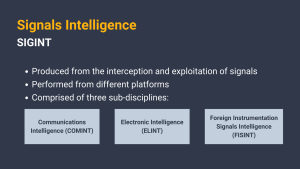
When intelligence operations shift from ideological conflict to the corporate realm, personal profit can erode those deeply ingrained standards.
For anyone who held high clearances and lived by those operational rules, as I did, watching top officials treat classified intelligence as a private asset is both jarring and a sobering reminder of how modern insider threats have evolved.
When we stood watch along the border of West and East Germany, handling sensitive crypto pads and tracking threat vectors across the divide, we understood that state secrets were not personal property—they belonged to the nation’s defense. The allegations against August Hanning and Manfred D. reveal not merely a breach of security protocols, but a breakdown of elite ethics.
When the men entrusted with leading intelligence agencies begin viewing state secrets as raw material for private enterprise, the entire architecture of trust collapses—not just between a government and its citizens, but among the allies who rely on them.
Decades ago along the Iron Curtain, we were taught that a single breached crypto pad or compromised frequency could cost lives. It turns out the greatest vulnerability wasn’t a failure of technology or a soldier slipping up on the border—it was the quiet decay of integrity at the very top.”
–30–
If you enjoyed this post, please consider subscribing to ForeignCorrespondent and tell your friends to subscribe. “It’s free—what a deal!” If you’ve received this from a friend and would like to be added to our distribution list for future blog posts, simply enter your email in the notifications box to sign up:
https://ronaldyatesbooks.com/category/foreign-correspondent.
You can also find my commentaries on Substack at https://ronyates.substack.com/ and the American Free News Network at https://afnn.us.
Please feel free to comment: We genuinely love hearing from you!
.