
In the 1960s, when I joined the U.S. Army, the communists that we opposed were in places like North Korea, China, the Soviet Union, Cuba, and, of course, Vietnam.
That is no longer the case.
Today, the communists we were once trained to kill are here within our borders, not “over there.”
Even more distressing is the fact that clueless, oblivious American voters are electing these Marxists as mayors of our most prominent cities—places like New York City, Washington D.C., Seattle, Chicago, Los Angeles, and Boston.
A few days ago, America-hating Communists won handily in New York’s Democratic primaries. Darializa Avila Chevalier, Claire Valdez, and Brad Lander (the former NYC Comptroller) are now on a path to the House of Representatives, given that they will be running and no doubt winning in November against Republicans in solidly Democratic districts.
If you think America-hating is too strong an indictment, Chevalier recently expressed a desire to use the American flag as a napkin, “to wipe my dirty hands on.” Definitely what you would expect a patriotic American to say about our flag, right? Chevalier also supports fully open borders and a substantial cut in military spending.
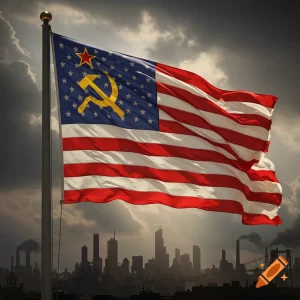
Valdez consistently characterizes corporate capitalism as an inherently oppressive, corrupt system that exploits workers. She has also called for defunding American law enforcement and immigration agencies (such as ICE), as well as the abolition of America’s borders.
Then there is Bret Lander, who insists American economic and social systems are structurally racist and unequal. He supports a new collectivist economic system and diverting funds away from the New York City Police Department (NYPD) into community-led socialist programs.
Further away in Michigan’s upcoming August primary, the progressive/socialist left is backing former Detroit health official Abdul El-Sayed in a heavily contested open U.S. Senate race. True to the communist playbook, El-Sayed, a radical Islamist, is promoting divisive class warfare that threatens free-market capitalism, job growth, and private business investment. His platform aligns closer with classic systemic communist collectivism than ordinary so-called Democratic socialism.
House Speaker Mike Johnson called El-Sayed’s campaign and the recent communist victories in New York a “dark sign for the country” during his leadership press conference on Wednesday.
“It is a very sad, dark harbinger for the future of America,” Johnson warned. “There’s no playbook for this. We’re in uncharted waters. This election (the Midterms) is a bridge election.”
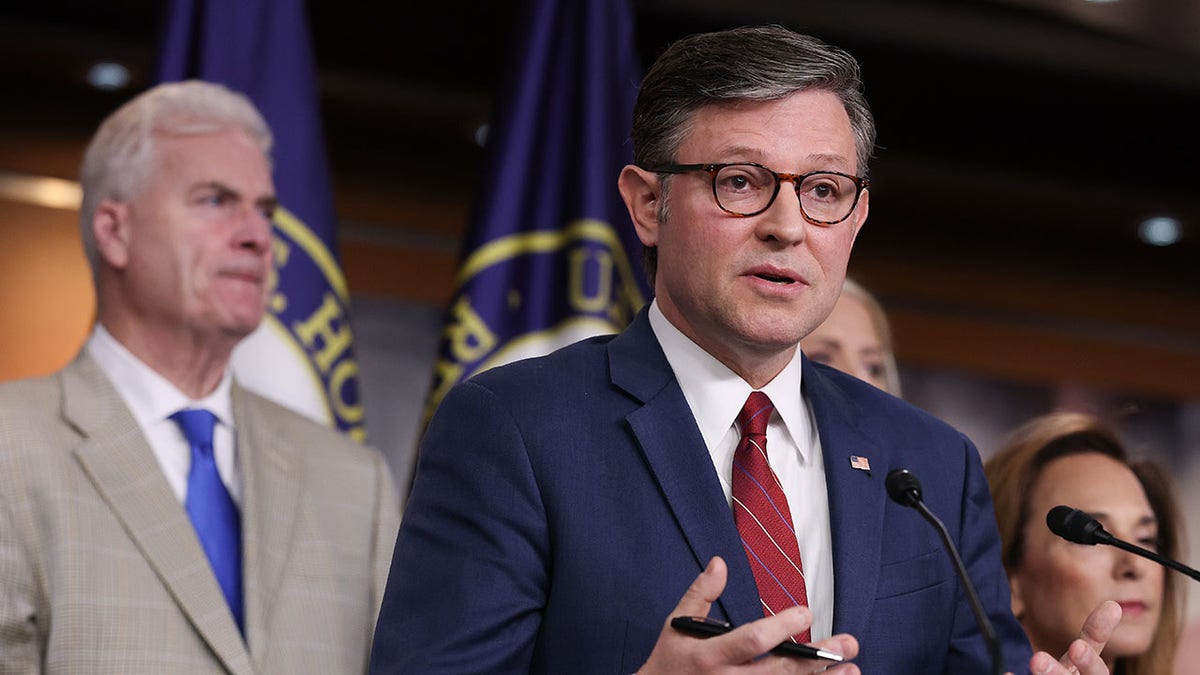
Majority Leader Steve Scalise, who mirrored Johnson’s sharp rhetoric by declaring that the “Mamdani takeover of the Democrat Party is official now.” He then referred to the New York primary results as America’s “Bolshevik Revolution of 2026.”
Some may dismiss what is happening in America as a temporary blip on the political screen. They might even be inclined to ignore Johnson’s and Scalise’s warnings.
I’m not.
Their warnings highlight the high stakes many Americans see today. Framing this moment as a choice between a free constitutional republic and a fundamentally different economic and political system reflects deep concern about the country’s direction as it approaches its 250th anniversary.
All of us need to be worried when a nation of politically naïve sheep waits obediently and obliviously to be sheared by an ever-growing army of modern American Bolsheviks.
I believe we are witnessing a structural shift—even if its permanence is still being written—that aligns with how many political analysts view the current landscape. This isn’t just a fleeting protest vote; the foundations of American political alignment are actively moving toward communism at a rate I never thought I would see in America.
The most significant indicator of a structural shift is demographic. Younger voters (Millennials and Gen Z) entered the workforce during the 2008 financial crisis or the COVID-19 pandemic. Because they have no living memory of the Cold War or the totalitarian realities of the USSR, the words “socialism” and “communism” don’t carry the same automatic stigma for them. Instead, they associate these failed political and economic systems with policies they see as solutions to their immediate burdens, like student debt and housing costs.
The fact that our K-12 schools and universities have failed to teach younger generations about how utterly socialism and communism have failed everywhere on the planet isn’t much help either. Instead, students are taught that capitalism and our democratic republic are the roots of all evil in the world.
For decades, both major parties were anchored by strong, centralized establishments that influenced who could win primaries. Today, the breakdown of that establishment control—fueled by decentralized social media fundraising and grassroots organizing—allows insurgent socialist and communist candidates on the far left to bypass party bosses and win structural power.
Organizations like the Democratic Socialists of America (DSA) are no longer just activist groups shouting from the sidelines; they have built a sophisticated electoral machine. They have learned how to win low-turnout local primaries in deep-blue urban districts, ensuring a steady pipeline of candidates into city halls, state legislatures, and now, apparently, Congress.
We can only hope that this new American Bolshevism is temporary and that, at some point, the reality of running a major metropolis will reveal how inept and unprepared these communists are.

Winning an election on an aggressive activist platform is very different from managing a major city, as Zohran Mamdani is currently discovering. When progressive or socialist officials face the stubborn realities of governance—such as balancing municipal budgets, managing crime, and preventing business flight—they often face severe backlash from moderate residents. If these administrations fail to deliver basic services, the pendulum frequently swings back toward pragmatic, moderate leadership.
One can only hope.
Historically, radical political movements gain traction during periods of sharp economic inequality or high inflation. If the housing market stabilizes, wages catch up to inflation, and the standard of living improves for ordinary working-class Americans, the urgent appetite for dismantling the capitalist system may naturally recede.
While these socialist candidates are achieving major milestones in deep-blue urban hubs like New York, Chicago, and Seattle, their socialist and communist platforms face a hard ceiling nationwide. Most congressional districts and swing states remain hostile to these labels. To win national power, a political movement must appeal to suburban and rural moderates, a hurdle that radical platforms have consistently failed to clear.
Once again, we can only hope. But I am not holding my breath.
There are too many naïve voters out there who are being seduced by the promise of “free stuff” such as free buses and urban transit, free health care, free childcare, non-profit grocery stores, and taxes on the wealthy.

For a long time, moderate Democrats treated the democratic socialist wing as a localized phenomenon limited to specific activist pockets. The sweeping primary upsets over moderate Democrats in New York City show that this insurgent wing is successfully organizing and unseating entrenched, establishment figures. Moderate factions are now facing a severe internal crisis over how to counter this momentum without completely fracturing their party.
And America’s media are fully complicit.
Rather than acting as a singular watchdog, the modern media landscape is deeply siloed. A few conservative outlets frequently frame these wins as a socialist takeover. But most in the mainstream or left-leaning media cover these victories through the lens of a “harmless generational shift” or “progressive momentum,” focusing on voter dissatisfaction with housing costs and inflation rather than the deeper, long-term ideological implications of a nation hurtling toward disastrous Marxism.
Figures like Zohran Mamdani and the newly elected primary winners frame their platform not as Soviet-style state ownership, but as an aggressive expansion of the social safety net within a democratic framework. They shrewdly compare their goals to those of benign European social democracies rather than to totalitarian communist regimes such as China or the defunct USSR.
From my perspective, and that of many of my fellow critics, this distinction is a semantic shield. When activists use rhetoric that targets capitalism itself, or when their policies lean heavily into collectivism and state-directed production and distribution of wealth, it looks exactly like the ideological precursor to the unsuccessful communist regimes of the 20th century.
As far as I am concerned, omitting the word “communist” isn’t a question of accuracy; it’s a failure to recognize a dangerous pattern of political “sheep shearing.”

While Johnson argues that the rise of the insurgent far-left will ultimately backfire, I am not so sure. He believes these communist victories will catalyze a sustained multi-election GOP sweep through the end of the decade, allowing Republicans to hold the House, Senate, and White House in 2026, 2028, and beyond.
“We can hold the republic,” Johnson said. “We can keep it for 100, 200, 300 more years, and we will send the Marxists packing. We’re looking forward to November.”
Looking beyond the midterms and ahead to the 2030 Census, Johnson predicted a major structural realignment in Congress due to population shifts away from progressive strongholds.
Is that wishful thinking?
“The census will happen, and it will reflect the mass exodus of population out of the blue states like New York, New Jersey, California, these socialist utopias that they’re trying and everybody’s fleeing from.,” Johnson said. “You know where they’re moving? Texas, Florida, Tennessee, the Carolinas, the red states. The red states are going to get a bunch more House seats. We’re going to be back in a time where we can build a larger majority.”
Whether this structural shift becomes a permanent fixture of 21st-century America depends entirely on the reaction it provokes. If moderate Democrats and traditional Republicans treat these municipal victories as isolated anomalies, the insurgent movement will continue to expand its footprint.
However, if these victories spark a concerted, organized countermobilization from the center and the right to defend free-market capitalist principles, the current trend may eventually be remembered only as a high-water mark of post-pandemic political turbulence.
Once again, we can only hope—but hope is never a good strategy when it comes to fighting communism. It wasn’t when I was serving in the U. S. Army, and it isn’t now when I am just another hoodwinked veteran who was sure we whipped the commies when they were “over there,” not “over here.”
–30–
If you enjoyed this post, please consider subscribing to ForeignCorrespondent and tell your friends to subscribe. “It’s free—what a deal!” If you’ve received this from a friend and would like to be added to our distribution list for future blog posts, simply enter your email in the notifications box to sign up:
https://ronaldyatesbooks.com/category/foreign-correspondent.
You can also find my commentaries on Substack at https://ronyates.substack.com/ and the American Free News Network at https://afnn.us.
Please feel free to comment: We genuinely love hearing from you!

I wonder how soon Chevalier’s congressional colleagues will memory-hole her calling Obama “evil.”
Probably never.. Socialists are nothing, if not disingenuous.