
During a discussion in a journalism class I was teaching at the University of Illinois a few years ago, I posited the following question: What do you think has been the greatest, most impactful invention in the world during the past 1,000 years?
The answers, as you might expect, were diverse and wide-ranging.
Included were contenders such as electric power, life-saving vaccines, the computer, the internet, the incandescent light bulb, the automobile, the internal combustion engine, nuclear power, insect and disease-resistant plants, jet propulsion, and the airplane.
Each of these was, without a doubt, critical to humanity.
But I suggested that none of these worthy candidates is more critical than a mid-15th-century invention: Johannes Gutenberg’s moveable type printing press.

Puzzled faces looked back at me.
“The printing press enabled the mass dissemination of knowledge, accelerated scientific development, the Reformation, and transformed education and governance,” I said.
A few students nodded in diffident agreement, but some still seemed unconvinced. So, I continued:
“Think of it. The printing press democratized information and language. It reinforced innovativeness. Significant advances, such as electricity and vaccines, were disseminated and spread through print-enabled scientific communities and literate populations.”
An expression of deferred agreement swathed the faces before me now. But I wasn’t finished.
“For the first time in human history, reams of knowledge, ideas, and information, which heretofore were the domain of a relative handful of privileged people, were now available to everybody, at a velocity many magnitudes beyond that of the painstakingly hand-copied tomes produced mainly by a few literate monks in cloistered monasteries.”

I ended with this: “Without printing presses, there would never have been mass-produced books, newspapers, and magazines, and the jobs you are now preparing yourselves for would not exist.”
A collective “I get it now” expression wafted over the faces in front of me.
“Point made,” I thought to myself.
Today, when I look back on that discussion, I feel a bit melancholy.
The argument I made still stands. Without the printing press, technological, political, scientific, economic, and social advancements could never have circulated as wholly and rapidly as they did.
But as a journalist and novelist, I worry not only about the future of books, newspapers, and magazines, but about the future of reading itself.
We seem to be on the brink of an era that is ending—the era of books and the enlightenment and critical thinking that reading them has brought to humankind.
I worry about the ever-diminishing number of readers in the world—especially readers who are willing to read lengthy, well-crafted books or who read books simply for pleasure.
I worry about diminishing attention spans when it comes to reading. For example, I venture that readers today do not have the patience or inclination to wade through a William Faulkner or Thomas Wolfe novel, as brilliant and worthy as they are.
In fact, I recently had a conversation with a twenty-something individual who complained about having to read a couple of Ernest Hemingway books (For Whom the Bell Tolls and A Farewell to Arms) for a college American literature class.
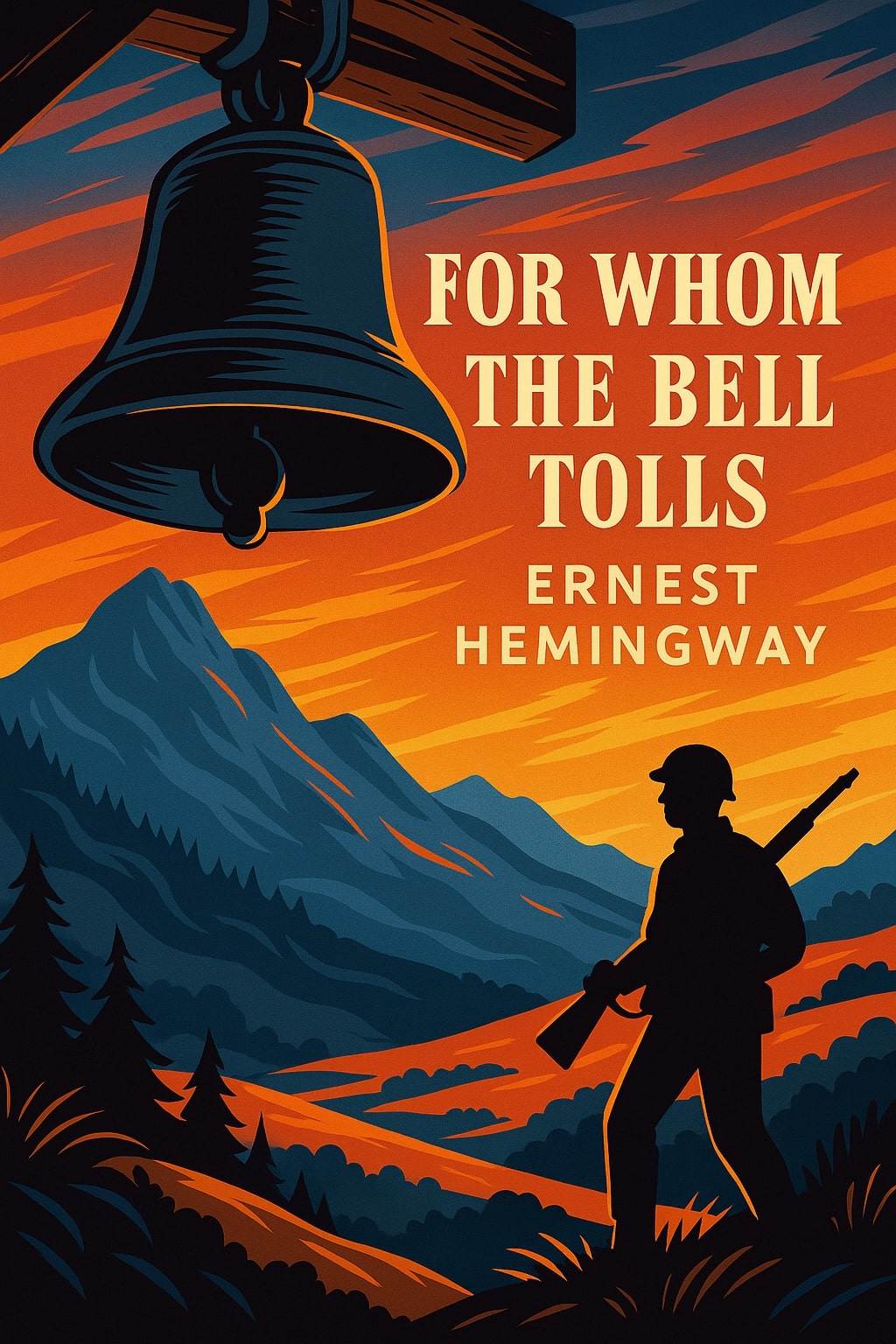
“I thought they were hard to get through,” she said. “The stories seemed slow and artificial.”
I wasn’t sure how to react to that criticism of Hemingway. After all, Hemingway is most noted for his minimalist, lean prose style, often called the “iceberg theory” or theory of omission. It’s a style marked by short, direct sentences, simple vocabulary, and understated description, with most of the emotional and thematic weight left unstated beneath the surface of the text—like the bulk of an iceberg below the waterline.
And “artificial?” If anything, Hemingway’s work always had an aura of authenticity to it—as though he were describing something that he himself had experienced.
I suspect this woman is not an outlier. She represents many of today’s readers who prefer slim electronic devices to comparatively cumbersome books and stories that are fast-paced to fit today’s hectic, frenetic lifestyle.
Readers today are more likely to read texts and newspaper articles on their smartphones or other electronic devices than complete novels inside the covers of a print book. When was the last time you saw a person reading a soft or hardcover book in public? If anything, they may prefer to listen to an audiobook or watch a video rather than read a book for diversion or leisure.
U.S. government data show reading for pleasure dropped from 28% in 2004 to 16% in 2023. Many Americans still read print books, but leisure reading has declined, and the frequency of reading for fun is lower than in the past. I wonder what that means for novelists, poets, and short story authors.
Audiobooks are where the growth resides in today’s publishing world. The Audio Publishers Association says audiobooks made up about 15% of all books published in 2024—and that number is growing by about 20 percent annually. Last year, 100,000 of the estimated one million print books were audiobooks.
A recent New York Times survey found that fewer print books are being assigned for reading in high school classes.
A Free Press article published the other day, entitled “Goodbye to the Age of the Book–An era of enlightenment is coming to an end,” suggested that we are moving from a literary culture to an oral culture.
“YouTube, TikTok, and podcasts are growing robustly,” the author Tyler Cowen wrote. “Texting is a significant form of communication, but it is the written word conforming to the standards of oral communication. Abbreviations, incorrect grammar, short messages, and a conversation tone are paramount, and there are few rewards for longer, more carefully crafted sentences. The snippets we read on our smartphones, however useful or interesting, do not serve the functions of reading Tolstoy or a long, serious book on Roman history.”

Cowen is correct. The Western world is continuing to move away from a special era of enlightenment when book reading and literary modes of thought were paramount. Cowen dated this era to the mid-18th century, when the rise of a nascent consumer society made mass-produced books affordable to a growing middle class, mainly in Britain, America, and France.
Studies reveal a significant decline in daily or regular recreational reading among Americans over the last two decades because people increasingly spend leisure time on screens (video streaming, social media, games), which correlates with less time spent on book reading.
Nevertheless, the Pew Research Center says, many adults still read at least one book per year — often more — and print books especially remain widely consumed.
What is declining is reading as a primary leisure activity — especially compared with screen time and short-form digital media like TikTok.
That’s a shame. Studies show that reading rather than listening or watching enables greater cognitive retention because it requires active mental engagement. The process of reading involves decoding words, constructing meaning, and synthesizing information. This leads to deeper processing of the material compared to passive listening or viewing.
Oral and visual methods of learning are acceptable for quick learning and social learning, especially for those who learn by hearing and need contextual guidance — but they do not allow the same depth of analysis or retention as reading. These methods are often passive, and the level of critical engagement or analysis may be less than what reading demands.
Experts like cognitive psychologist Dr. John Sweller (known for his work on cognitive load theory) argue that reading helps learners engage in deeper cognitive processing because it typically requires them to process information step-by-step. This leads to stronger connections in memory and understanding.
When you read, you can go back to previous sections, pause for reflection, and even take notes. This ability to control pace is especially valuable in complex subjects where you need time to think or re-read.
With oral or visual content, the speed of delivery often dictates how quickly you can absorb and reflect on information. Research has shown that reading promotes better long-term retention compared to oral or visual learning. One key reason is that reading requires the learner to actively decode and process information rather than passively absorb it.

Reading also exposes you to a broader range of vocabulary than spoken language typically does. Written texts, especially more formal or academic ones, contain a wider array of words and phrases that help enhance language acquisition. Reading requires more abstract thinking and critical analysis. When reading a complex text, you need to break down arguments, evaluate evidence, and make connections across diverse ideas.
There is a strong connection between reading and writing. I always told my students that if you want to write well, you need to read well. Why? Reading helps you understand grammar, sentence structure, and how to organize ideas, which is crucial for improving writing skills.
This is especially important for developing clear and coherent arguments in essays, research papers, and other written forms of communication. But it is also critical for writers of fiction because reading exposes you to different writing styles, vocabulary, pacing, and organization. We learn by imitating good writing. Notice I said “by imitating,” not plagiarizing.
So what does it mean if we eventually abandon books as a way to learn? Some experts say that while learning is shifting toward more oral and visual modes, it doesn’t mean humanity will become illiterate. Instead, we may become selectively literate.
For example, people who read deeply—a literate elite—will retain disproportionate power in law, science, governance, and even oversight of artificial intelligence.
On the other hand, a broadly informed public that is highly capable of visual reasoning and oral communication but less practiced in abstraction and critical scrutiny will emerge.
That leads me to the question: What kinds of minds would a world without books produce?
Experts say that the world would be more reactive than reflective, more communal than solitary, more intuitive than analytical, and more emotionally driven than logically disciplined.
That is neither inherently good nor bad, say experts—but it is different, and societies must choose whether to preserve deep reading deliberately or let it erode passively.
Humanity will not forget how to read, they add—but it may forget why reading mattered unless it is actively protected.
The question we need to ask may not be “Is the age of books ending and will books disappear?” but rather “Will we still value the kind of critical thinking that books make possible?”
One fact remains, however. Without Gutenberg’s mechanized printing press, which was invented almost 600 years ago in Mainz, Germany, our world would not be the literate and highly advanced place it is today.
And you would not have been able to read this column.
–30–
If you enjoyed this post, please consider subscribing to ForeignCorrespondent and tell your friends to subscribe. “It’s free—what a deal!” If you’ve received this from a friend and would like to be added to our distribution list for future blog posts, simply enter your email in the notifications box to sign up:
https://ronaldyatesbooks.com/category/foreign-correspondent.
You can also find my commentaries on Substack at https://ronyates.substack.com/ and the American Free News Network at https://afnn.us.
Please feel free to comment: We genuinely love hearing from you!