
When I was a college student, there was a required reading program called Western Civilization that exposed us to 3,000 years of Western thought and the writings and ideas of a broad range of individuals, from Adolf Hitler to Thomas Hobbes, from Karl Marx to Baron de Montesquieu.
The idea behind the program was to expose students to the broadest array of human thought possible and required two semesters of weekly discussion sessions. Those sessions were followed by a four-hour exam in which students were required to answer several short-answer questions and a couple of longer essay questions that obliged them to compare and contrast the ideas and concepts they were supposed to have tucked neatly away in their craniums.
I loved the required Western Civ course. Many students hated it—mainly because about one-third of them failed the final exam and had to retake it.
So, what does the Western Civilization course I took at the University of Kansas decades ago have to do with why so many young Americans are drawn to communism?
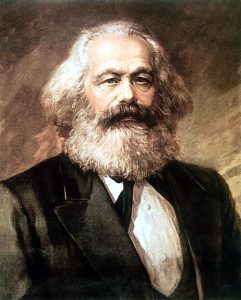
Just this. By reading Karl Marx’s “The Communist Manifesto,” which he co-authored in 1848 with fellow German thinker Friedrich Engels, I was exposed to the fathers of today’s communist ideology.
Later, in 1867, Marx published “Das Kapital,” in which he laid out his vision of capitalism and its inevitable tendencies toward self-destruction.
I read that also.
The point is this: I went directly to the source and learned the thinking and beliefs that underlie communism.
I also learned that historically, more than 40 nations have attempted to build socialist or communist states in the past 150 years—ranging from major empires like the Soviet Union and China to smaller states across Eastern Europe, Asia, Africa, and Latin America.
Without exception, every state that attempted full state ownership of production and a single-party Marxist framework evolved into a centralized, totalitarian, top-down regime rather than the decentralized, worker-led paradise that Marx and Engels envisioned.
Estimates by historians place the total human cost of 20th-century communist states—through state-directed mass executions, forced labor camps (like the Soviet Gulags), political purges, and artificial famines caused by forced collectivization—at between 65 million and 100 million deaths.
Why would I support such an obviously flawed and noxious system of government, especially one that I had read about and evaluated independently? From my reading and research, I discovered how Communism and its near-beer cousin socialism have consistently and absolutely failed humans on this planet.
How have communists and socialists failed? First, there was what I call the knowledge and incentive deficit. Central planners in state capitals could never accurately calculate the prices, supply, and demand for the millions of goods their citizens needed. Removing market prices and individual profit motives systematically led to widespread shortages, rationing, economic stagnation, and lower living standards compared to market-based capitalist economies.
Because implementing state communism requires total control over property, agriculture, labor, and wealth redistribution, the state must exponentially expand its coercive authority. Concentrating complete economic and political power into the hands of state planners creates a total monopoly on force, which historically invites dictatorships and absolute suppression of dissent.
In the name of ideological purity, state-controlled regimes treated political speech, religious worship, and independent journalism as counterrevolutionary threats. To maintain control, they relied on expansive secret police networks, forced labor camps, and strict censorship.

Then, there was the failure of collective agriculture and famine. Forced collectivization of private farms—most notably during the Soviet Holodomor in Ukraine and China’s Great Leap Forward—consistently devastated agricultural production, resulting in the largest man-made famines in human history.
So why, then, do young Americans seem so drawn to such a clearly failed form of government? Can’t they see the inherent faults of socialism and communism? What are the key drivers of youth appeal?
Let’s take a look.
Younger generations in America have grown up through major economic disruptions (such as the 2008 financial crisis, rising housing costs, student loan debt, and inflation). When traditional market economies appear to make homeownership, stable employment, or upward mobility difficult to achieve, alternative economic systems become appealing alternatives rather than historical warnings.
For anyone born after 1990, the Cold War, the Soviet Union, and the horrors of 20th-century authoritarian regimes are textbook history rather than lived memory. Without personal or familial context regarding life behind the Iron Curtain or under autocratic rule, the catastrophic outcomes of state-controlled systems feel abstract or distant.
When I joined the U.S. Army in the 1960s, it was abundantly clear who America’s enemies were. It was the communists who ruled the Soviet Union, China, the Warsaw Pact nations of Eastern Europe, North Korea, Cuba, and North Vietnam. Our job, we were told, was not to coddle communists as they are today in America, but to kill them.
The true fallacy of socialism and communism comes down to idealism vs. implementation. Proponents and educators often present socialism in terms of its ideals—fairness, universal healthcare, state-backed safety nets, and environmental stewardship—while dismissing historical failures such as corruption and mismanagement rather than the inherent flaws of centralized control. This allows communist ideology to remain perpetually pristine in theory.
America’s media, social platforms, and academic environments frequently emphasize the shortcomings and inequalities of market capitalism while framing collective, state-led solutions as morally superior and empathetic. In other words, America’s youth are consistently indoctrinated by socialist and communist educators in our schools and universities.
Vladimir Lenin, leader of the Bolshevik Revolution and founder of the Soviet state, reportedly said, “Give me just one generation of youth, and I’ll transform the whole world.”
Lenin was correct. Just look at those who have embraced communism and socialism today in America. Many have been brainwashed in classrooms by socialists and communists.
Finally, today we are seeing the rhetorical rebranding of socialism and communism. Modern advocacy often conflates democratic socialism or Scandinavian-style welfare capitalism (which still rely heavily on free-market economies) with actual socialist or communist state ownership. This softer branding makes radical concepts far more palatable to a naïve, indoctrinated population of young Americans.
“Okay, so the Soviet Union and communist Eastern European countries failed with their brand of communism and socialism, but what about China?” a socialist- or communist loving student today might ask.
This is one of the most successful arguments for adopting communism in America that so-called Democratic socialists like Abdul el Sayed, Alexandria Ocasio-Cortez, Bernie Sanders, Zohran Mamdani, Darializa Avila Chevalier, Christopher Rabb, and Melat Kiros like to make.
The “China success story” narrative is a prime example of flawed reasoning. As the Chicago Tribune’s chief Asia correspondent, I spent several years covering China and its harmful influence across Asia, including the bloody Tiananmen Square massacre of thousands of Chinese students and pro-democracy protesters in 1989. I have seen the People’s Republic of China up close, and it is not a pretty picture.

When China is mentioned in modern academic or public discussions, its dramatic economic growth over the past four decades is often glowingly cited. However, examining the actual history clarifies the distinction between communist doctrine and China’s modern growth.
The fact is that China’s economic growth came from Western-style market reforms, not communism. Its rapid escape from poverty did not occur under Mao Zedong’s pure state communism, which produced tens of millions of deaths through the “Great Leap Forward” and the “Cultural Revolution.” China’s economic surge began only in 1978, when Deng Xiaoping introduced market mechanisms, private enterprise, global trade, and foreign investment.
Still, while China integrated market capitalism to create wealth, the Chinese Communist Party retained an absolute political monopoly. Modern China utilizes high-tech surveillance, extensive internet and media censorship (the “Great Firewall”), suppression of religious minorities, and state dominance over key industrial sectors to maintain absolute control over its citizens.
So, what is the answer? How can educators and historians better communicate the real-world lessons of 20th-century authoritarianism to a generation that didn’t live through it?
As someone who spent 13 years as a professor and dean at the University of Illinois, I believe that to effectively reach generations of Americans raised entirely in the post-Cold War era, educators and historians must move away from dry textbook timelines and abstract political theory. Bridging this historical gap requires strategies that ground the consequences of authoritarianism in human reality.
Some states, such as Florida, have enacted legislation requiring schools to teach an accurate, “age- and developmentally appropriate” history of communism in classrooms beginning in the 2026-2027 school year.
In Florida, the curriculum requirements include teaching the history of communism in the United States, the atrocities committed in foreign countries under communism, comparative discussion of extreme political ideologies, the increasing threat of communism in the United States, the economic, industrial, and political events that have preceded and anticipated communist revolutions, and the communist policies and practices of Cuba and Latin America.
While I think this is something all American schools should do, I also believe the focus should be on primary sources and human narratives. I suggest replacing broad statistical summaries with personal accounts—diaries, oral histories, letters, and memoirs from survivors of forced-labor camps, political purges, and state censorship. Humanizing the victims makes the abstract numbers (such as millions lost to artificial famines, purges, and gulags) tangible and personal.

I found this especially useful in 1985 when I secretly interviewed political prisoners in communist “re-education camps” in Vietnam. Their stories were horrific and unforgettable, and I am appalled today when I hear socialists and communists talk about “education camps” for so-called “MAGA Republicans” and other Donald Trump supporters.
Educators should examine the incremental loss of rights in socialist and communist countries. They should point out that total rule rarely happens overnight. They should show students how authoritarian systems typically begin with seemingly benign promises—safety, economic security, or social equity—and gradually strip away individual liberties, free press, and political dissent step by step, all for the “greater good.”

Don’t believe me? Don’t believe it can happen in America? Remember what happened to our rights and liberties during COVID-19. If that wasn’t a blueprint for stripping away our rights, then you were either in a coma or on a different planet.
Schools and universities should teach comparative economic realities. They should directly compare everyday life, consumer choices, and basic living conditions across divided systems (e.g., former East vs. West Germany or pre- and post-reform China) with those of Western capitalist societies. Demonstrating the tangible differences in daily necessities, speech, and movement grounds the theoretical debate in concrete terms.
Educators should teach media literacy that helps students analyze state propaganda. Showing how utopian promises have been used to justify coercion, secret police networks, and informants can help students recognize similar rhetorical patterns among socialists and communists in America today.
By highlighting the mechanics of power concentration, we can shift the focus from ideology alone to the danger of centralized power. When the state gains absolute control over property, employment, and information, independent institutions disappear, leaving no mechanism to hold leaders accountable.
Once we can do that, then we need to connect theory to the modern debate between communism and capitalism. A critical final step is helping students distinguish between different political models.
Educators should clearly differentiate between total state ownership (command economies that historically relied on coercion) and market-based social safety nets (such as the Nordic model, which relies on private enterprise and free markets).
Clearing up this confusion prevents students from mistaking autocratic state control for modern social reform.
Most of all, it will allow us to begin to understand why so many young Americans are beguiled by Communism and socialism and stop the insanity before it is too late.
–30—
If you enjoyed this post, please consider subscribing to ForeignCorrespondent and tell your friends to subscribe. “It’s free—what a deal!” If you’ve received this from a friend and would like to be added to our distribution list for future blog posts, simply enter your email in the notifications box to sign up:
https://ronaldyatesbooks.com/category/foreign-correspondent.
You can also find my commentaries on Substack at https://ronyates.substack.com/ and the American Free News Network at https://afnn.us.
Please feel free to comment: We genuinely love hearing from you!